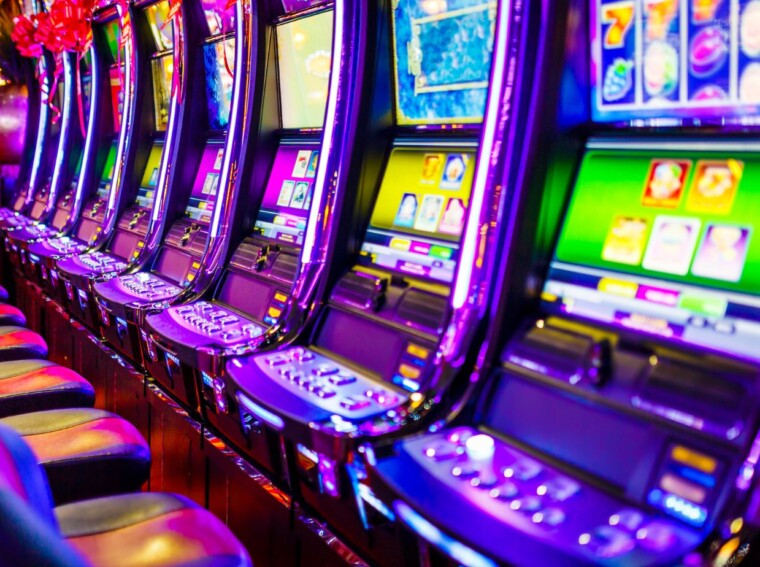
There is a particular kind of game that never really ends. It doesn’t conclude with a final boss or a closing screen. It doesn’t reset politely after a win. Instead, it lingers. It carries on accumulating, remembering, waiting. In an era of instant gratification, this sort of design feels almost defiant. And nowhere is that defiance clearer than in the modern slot machine that seems structurally incapable of being finished.
Traditional games are built around closure. Even the most open-ended experiences offer moments of completion, a sense that something has been achieved and put to rest. Slots were once similar. A spin resolved itself quickly. You won or you didn’t. The machine moved on. What has changed is not the spin, but the horizon beyond it. Some games now operate with an endpoint so distant it becomes almost theoretical.
This is not a design bug of design. It is the design.
The never-ending slot is not meant to be completed in any ordinary sense. Its purpose is to extend anticipation indefinitely, to transform waiting into the experience itself. The prize sits somewhere in the future, growing incrementally, visible but unreachable. Each spin contributes to something larger, something unfinished.
The never ending wheel of a progressive slots is structured not around individual resolution but around collective accumulation and the slow inflation of possibility over time. It’s unique and that’s what makes it special.
The Appeal Of The Unfinished
Psychologically, humans are more comfortable with beginnings than endings. Beginnings offer hope. Endings impose judgement. The unfinished game sits permanently in the former state. It promises without concluding. It invites participation without closure.
This is why progress bars are so effective in modern software and gaming. They show movement without finality. The bar fills, pauses, fills again. Completion is always coming, but never quite here. The never-ending slot borrows that logic wholesale. Each spin nudges a number upward. Each moment feels contributory, even if nothing immediate happens.
What matters is not the outcome, but the sense of being part of an ongoing process.
Design Borrowed From Elsewhere
This approach did not originate on the casino floor. It has clear roots in video game design, particularly in multiplayer and online environments. Shared worlds, global events, and cumulative challenges all rely on the same principle. Individual actions matter because they feed into something larger than the player.
The difference is that in traditional games, the reward is often narrative or cosmetic. In the slot format, it is numerical. A jackpot that grows in public view becomes a kind of shared scoreboard. Everyone sees it. Everyone contributes. No one controls when it ends.
This creates an unusual tension. The game is solitary in action but communal in consequence. You play alone, yet you are always aware of others playing too.
Time As A Feature
Most games try to compress time. They reward speed, efficiency, and repetition. The slot that refuses to finish does the opposite. It stretches time deliberately. The value of the prize is tied directly to its duration. The longer it survives, the more meaningful it appears.
This reframing of time is subtle but powerful. Waiting is no longer dead space. It is productive. The jackpot’s longevity becomes part of its identity. A prize that has been building for months or years feels heavier than one assembled overnight.
In this way, duration itself becomes a design feature rather than a by-product.
The Illusion Of Inevitability
One of the most interesting aspects of the never-ending slot is how it flirts with inevitability without ever guaranteeing it. The number grows. The prize swells. At some point, surely, it must fall.
That belief is never stated, but it is implied. And implication is often more persuasive than certainty. The game never says the win is coming soon. It simply allows the number to rise high enough that the idea takes root on its own.
This is where the design becomes quietly elegant. It does not instruct belief. It allows belief to form naturally.
A Social Artefact, Not Just A Game
Over time, these jackpots become cultural artefacts within their own ecosystems. Players talk about them. Screenshots circulate. The size of the prize serves as a reference, a type of knowledge that is shared by everyone.
This concept is well understood within gaming culture. Leaderboards, world records, and speedrun times can be seen as analogous concepts. The uninterrupted, ongoing slot taps into this concept, making it less about victory and more about observation.
Why It Resists Completion
The brilliance of this design lies in its resistance to resolution. A finished game disappears from conversation. The state of incompleteness continues. The unclaimed jackpot continues to have narrative value.
It is a tale that is not yet finished, and tales that are not finished encourage curiosity. From a design standpoint, this is very efficient. The same mechanics repeat. The same visuals remain. What changes is the scale.
And scale, as it turns out, is enough.
A Reflection Of Modern Play
The slot that defies termination appears to be distinctly modern because it echoes the way we interact with other digital experiences more generally. We scroll endlessly. We play endlessly.
We use systems that are designed to be infinite, not finite. In this light, the eternal slot machine is not a problem; it is a reflection of a game designed using the same rules that apply to social media, live services, and updates. Endings are optional. Continuity is mandatory.
The Quiet Confidence Of Unfinished Design
There is confidence in a game that does not hurry toward an ending. It assumes attention will return. It trusts that anticipation is enough.
The slot that refuses to finish is not loud about this trust. It does not announce itself as innovative. It simply persists. Growing slowly. Waiting patiently. Allowing time to do the work.
In a world obsessed with outcomes, that patience is almost radical.