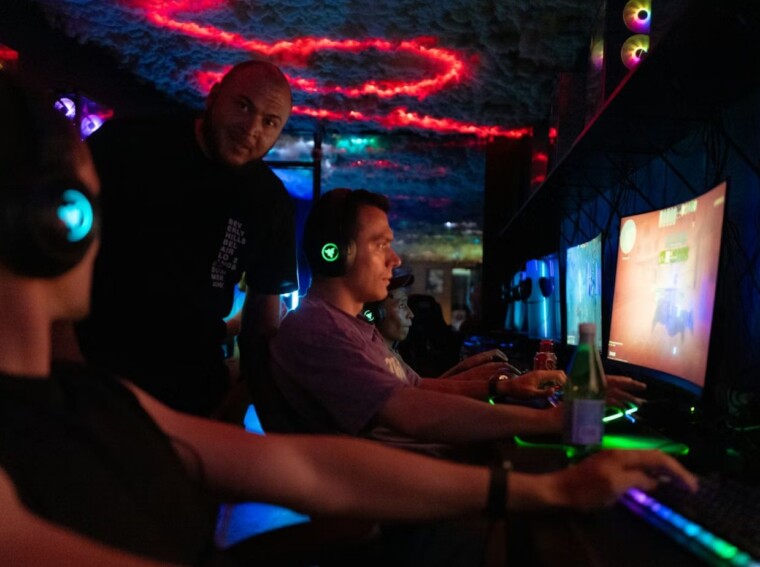
Modern play rarely sits inside a single box on a shelf. A match can start on a console, continue on mobile, stream to spectators, and spawn a marketplace of add-ons and in-game currency. This is why digital ecosystems driving global gaming communities have become the more useful lens than any one title or device. Publishers, platform holders, streamers, and volunteer moderators shape the experience, even when they never touch the code. The ecosystem view clarifies how app-store policies, payment rules, and cultural trends ripple across genres and regions.
What Makes a Gaming Ecosystem Work
A gaming ecosystem is an interconnected network of platforms, players, technologies, and economic structures that support how games are distributed, played, watched, moderated, and monetized. It depends on shared digital infrastructure such as identity systems, payment rails, cloud services, matchmaking, anti-cheat tools, and content delivery. Within that network, social connection forms through voice chat, guilds, creator channels, forums, and cross-platform friend graphs.
Traditional models treated games as self-contained products with a one-time purchase and a fixed audience. Ecosystem thinking, on the other hand, tracks how value moves across services, communities, and third parties, where updates, user-generated content, and live operations can matter as much as launch day. Players who want to participate in these economies can try LDShop as one example of how ecosystem access points connect users to in-game currencies and services.
Because these networks operate across borders and time zones, community formation becomes a continuous process. It is shaped by platform policies, interoperability choices, and the incentives built into digital economies. According to global gaming market projections, the scale of these interconnected systems continues to expand, reinforcing why ecosystem-level thinking matters for understanding modern gaming communities.
How AI Shapes Player Experiences Across Ecosystems
Artificial intelligence increasingly acts as the connective tissue inside a gaming ecosystem, translating huge volumes of play data into decisions that feel local to each community. Matchmaking models can group players by skill signals and preferred playstyles, while recommendation systems surface events, creators, or user-generated maps that match past behavior. Across platforms, shared identity graphs let models adapt as players migrate between devices.
Machine learning also tunes the social layer. Automated moderation tools flag harassment patterns, detect spam economies, and prioritize reports for human reviewers, helping communities scale without losing their character. The same feedback loops support retention systems discussed in player engagement strategies in social games, where incentives and social dynamics can be adjusted based on observed participation rather than assumptions.
At the ecosystem level, AI can strengthen the digital economy by identifying fraud, account takeover attempts, and suspicious trading flows, which supports trust in marketplaces and virtual currencies. However, it can also amplify inequities if training data reflects biased enforcement, or if personalization funnels players into narrow experiences that limit discovery.
Sustainable growth depends on governance: transparent rules, appeal paths, and regular auditing of models. When aligned with community norms, AI becomes a tool for belonging, not just optimization.
Community-Driven Models and Player Agency
As gaming ecosystems expand, control increasingly shifts from top-down platform decisions toward co-creation with players. In community-driven ecosystems, rules, content priorities, and norms emerge through ongoing negotiation between developers, creators, and organized groups.
Blockchain-based systems can formalize this participation by tying identities or in-game assets to verifiable ownership. Through decentralisation, communities may vote on policy changes, allocate shared treasuries, or set standards for marketplaces, rather than relying on a single operator’s discretion. Some projects experiment with governance forums where token holders propose feature roadmaps, while others use elected councils to review moderation rules or approve third-party integrations.

Even outside crypto, similar patterns appear when studios publish public RFCs, run test realms with binding feedback, or empower guild leaders to shape event calendars. Player agency tends to support long-term sustainability because it creates shared responsibility and reduces the shock of unilateral change.
When people see their input reflected in decisions, social connection deepens, and communities can adapt through collective problem-solving instead of fragmentation. This resilience can also attract new contributors, since governance pathways clarify how newcomers earn voice and status gradually.
Mobile Gaming as the Global Access Point
For many communities, the first contact with a gaming ecosystem happens in an app store, not a console aisle. Mobile gaming lowers the entry barrier through familiar devices, flexible session lengths, and payment options tied to local norms.
That mobile-first reality shapes architecture. Developers design around touch controls, intermittent connectivity, and small-screen readability, then build social layers that work on the move, such as lightweight clans, chat, and creator sharing. As mobile technology shaping digital engagement evolves, distribution and discovery increasingly flow through mobile operating systems and super-app ecosystems.
Adoption patterns vary by region. In parts of Southeast Asia, India, Latin America, and sub-Saharan Africa, smartphones often outpace dedicated hardware, so communities form around titles that run on mid-range devices and support local languages. These dynamics also affect the digital economy, since wallet integrations, carrier billing, and regional pricing influence who participates in marketplaces, events, and competitive ladders.
Broader access widens community diversity, and it changes what “global” means for norms, moderation, and identity across borders into console and PC cultures.
Trust, Verification, and Responsible Gaming
Trust functions as an invisible layer that lets global communities cooperate at scale. In a gaming ecosystem, shared rules need a signal that outcomes are fair and enforceable over time. That signal comes from digital infrastructure for identity, payments, and moderation.
When systems log decisions and support appeals, members can predict how conflicts, transactions, and sanctions will be handled. Verification adds a protective perimeter without turning play into bureaucracy. Strong authentication, device checks, and anti-fraud monitoring reduce bots, cheating, and account takeovers, which protects competitive ladders and creator economies.
Long-term participation also depends on responsible gaming initiatives embedded in community norms. Features like time reminders, spend limits, and self-exclusion pathways help people stay engaged without masking risk for higher-risk players. The challenge, accordingly, is balancing open access with safeguards that scale across regions and ages.
Operators can add friction where harm concentrates while keeping onboarding simple and explaining why protections exist.
Cross-Industry Influence and the Broader Digital Economy
Design patterns from the gaming ecosystem often migrate outward. Real-time virtual wallets, identity checks, and fraud monitoring developed for item trading resemble tools now used in fintech. Retail borrows limited-time drops and loyalty loops from in-game events, and entertainment adopts always-on live operations.
Esports further professionalizes community engagement. Tournament rulebooks, transparent officiating, and creator-led broadcasts turn informal fandom into managed participation, with standards for moderation, sponsorship disclosure, and competitive integrity.
The metaverse builds on the same principles: persistent identity, shared spaces, interoperable assets, and social presence that can extend beyond any single title. As these models circulate, they shape the digital economy by normalizing digital ownership, peer-to-peer marketplaces, and community governance expectations across apps and platforms, not just games. In turn, adjacent sectors feed back expectations for privacy, compliance, and consumer protection.
Where Gaming Communities Go From Here
Gaming communities evolve when infrastructure, governance, creators, and moderation operate as one system. AI, mobile distribution, and verification influence who participates, how norms form, and what content travels.
Because the gaming ecosystem spans app stores, streaming, and shared identity, local cultures mix with global feedback loops. This interconnection makes fairness, safety, and transparency shared priorities, even when rules differ by region.
The next phase will likely align incentives in the digital economy with community trust, so trading and co-creation support participation. Sustainable ecosystems will adapt through clear policies and accountable decision-making across devices, genres, and time zones at scale.