
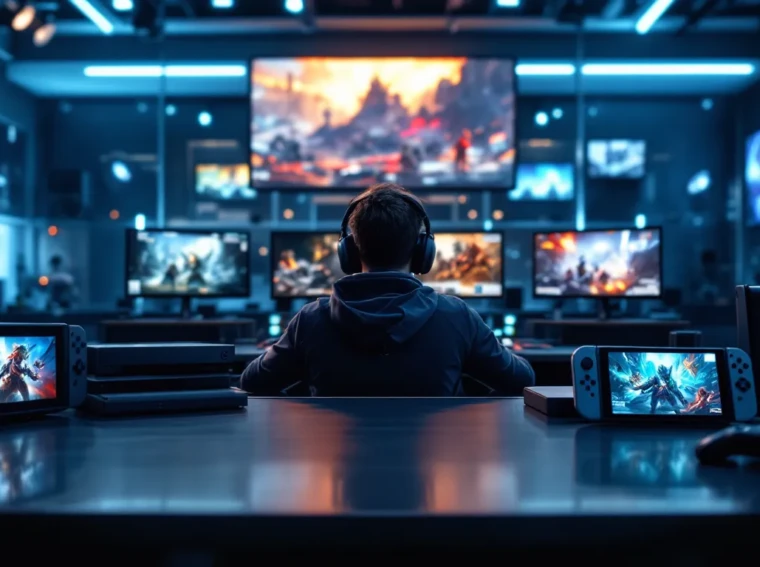
Video games have become one of the most dominant entertainment mediums on the planet, commanding billions in revenue, millions of players, and an entire culture built around competition, creativity, and community. Whether you’re a hardcore esports competitor grinding ranked matches, a casual player catching a few rounds between work shifts, or someone diving into immersive RPGs for the first time, the landscape of gaming in 2026 offers something for everyone. The industry has evolved dramatically over the past five decades, from simple pixelated arcade cabinets to photorealistic open worlds and cloud-based experiences that let you play anywhere. Understanding all things video games means exploring not just the platforms and genres, but the culture, technologies, and mindsets that make gaming such a compelling force in modern entertainment.
Key Takeaways
- Video games have evolved from arcade quarters and 8-bit home consoles to a multi-billion-dollar entertainment industry with diverse platforms including PC, consoles, and mobile, each offering unique advantages for different player types.
- All things video games now encompasses competitive esports careers earning six-figure salaries, professional-grade streaming communities, and emerging technologies like VR and cloud gaming reshaping how and where people play.
- Success in modern gaming—whether competitive or casual—requires deliberate practice, genre selection matching your preferences, and community engagement rather than simply accumulating playtime hours.
- Content creators and streamers have become central to gaming culture, with platforms like Twitch and YouTube democratizing expertise and directly influencing game sales and developer decisions through their influence.
- Indie developers are driving creative innovation by filling the gap left by risk-averse AAA publishers, proving that smaller teams can create critically acclaimed, commercially successful games with original ideas.
- The gaming landscape in 2026 offers unprecedented accessibility across platforms—from free-to-play mobile games to subscription services like Game Pass—making gaming more welcoming to diverse audiences than ever before.
The Evolution Of Video Gaming From Arcade to Modern Era
Early Foundations and the Golden Age of Arcades
Gaming didn’t start in your living room. It started in dimly lit arcades in the late 1970s and early 1980s, with machines like Pong (1972) and Space Invaders (1978) pulling in quarters and building the blueprint for everything that followed. These weren’t just games, they were social hubs. Kids and teens would pile into arcades after school, pumping coins into cabinets, competing for high scores, and creating the first gaming communities.
The golden age of arcades lasted roughly from 1978 to 1985. Games like Donkey Kong (1981), Pac-Man (1980), and Galaga (1981) became cultural phenomena. The technology was primitive by today’s standards, simple sprites, limited color palettes, 8-bit audio, but the game design was tight. Developers had to make games engaging with minimal resources, which forced creativity and punished poor design immediately. Players could tell within seconds if a game was worth their money.
The arcade era also established core gaming concepts still relevant today: high scores, difficulty progression, pattern recognition, and the satisfying “just one more round” loop. Arcades weren’t profitable just because they were novel, they were fun, challenging, and social. Understanding this foundation helps explain why gamers still chase high scores, speedrun records, and competitive rankings.
Home Consoles Revolution and 8-Bit Renaissance
The 1983 video game crash, caused by market oversaturation and poor-quality games flooding the market, nearly killed the industry. But Nintendo’s Nintendo Entertainment System (NES) revived it by establishing quality control standards and positioning gaming as a family-friendly medium rather than just an arcade pastime. Released in North America in 1985, the NES shipped with Super Mario Bros., a game that didn’t just save Nintendo, it redefined what a video game could be.
The 8-bit era (roughly 1983–1995) brought gaming into homes. The NES dominated with iconic franchises like The Legend of Zelda, Metroid, and Final Fantasy. The Sega Genesis launched in 1989 with Sonic the Hedgehog, creating the first real console rivalry and proving the market could support multiple strong platforms simultaneously. Meanwhile, personal computers became viable gaming platforms, with titles like Oregon Trail and King’s Quest establishing PC gaming as its own category.
This era established console exclusives, franchises, and the idea that gaming could tell stories as compelling as any film or book. Games moved beyond arcade mechanics into narrative-driven experiences with exploration, puzzle-solving, and character development. How Gaming Has Evolved demonstrates how these foundational principles shaped modern game design and player expectations.
Modern Gaming Platforms and Hardware
PC Gaming: Performance and Customization
PC gaming in 2026 is about raw horsepower and flexibility. Unlike consoles with fixed specifications, PCs can be customized endlessly, upgrade your GPU for ray-tracing performance, swap your CPU for higher frame rates, or install an SSD for instant load times. This modularity attracts players who want cutting-edge graphics, high refresh rates (144Hz, 240Hz, or higher), and the ability to tweak settings for competitive advantages.
The rise of digital storefronts like Steam, Epic Games Store, and GOG has made purchasing and managing PC games frictionless. Steam alone has over 70,000 titles, creating a library so vast that choice paralysis is real. PC gaming also dominates esports, most competitive titles like Counter-Strike 2, League of Legends, and Valorant are PC-exclusive or PC-first.
Performance matters on PC. A RTX 4090 or RTX 5090 can crush 4K gaming at high frame rates, while mid-range GPUs like the RTX 4070 handle 1440p gaming smoothly. CPU performance, RAM speed, and storage type all affect the experience. For competitive games, 144+ frames per second is standard: for single-player titles, 60 FPS at high settings is sufficient. Keyboard and mouse input, with near-zero latency and infinite customization, remains the gold standard for FPS and strategy gaming.
Console Gaming: PlayStation, Xbox, and Nintendo
Current-generation consoles, the PlayStation 5 (released November 2020), Xbox Series X and Series S (released November 2020), and the Nintendo Switch (released March 2017, with a refresh expected in 2025), define the high-end gaming landscape for most players.
The PS5 leads in exclusive titles. God of War Ragnarok, Final Fantasy VII Remake, Elden Ring, and Baldur’s Gate 3 are system sellers. The PS5’s SSD architecture enables near-instant loading and creative game design possibilities. The DualSense controller’s haptic feedback and adaptive triggers add tactile depth to games in ways that PC and Xbox haven’t fully matched.
The Xbox Series X competes on raw specs, it’s slightly more powerful than the PS5, but Xbox’s strength is Game Pass. This subscription service gives access to hundreds of games, including day-one releases of Microsoft first-party titles. For casual and budget-conscious gamers, it’s unbeatable value. The Xbox Series S offers a digital-only, cheaper entry point, hitting 1440p at 120 FPS in many games.
The Nintendo Switch is the outlier: less powerful but portable. Its hybrid design (docked console, handheld device, tabletop mode) changed how people think about console gaming. The Legend of Zelda: Tears of the Kingdom, Super Smash Bros. Ultimate, and Animal Crossing: New Horizons showcase the Switch’s unique appeal to both hardcore and casual audiences.
Mobile Gaming: Accessibility and Casual Play
Mobile gaming is the largest gaming sector by player count. Smartphones and tablets reach billions of people globally, making mobile gaming the entry point for millions who don’t own consoles or gaming PCs. Games like Candy Crush, PUBG Mobile, Genshin Impact, and Clash Royale generate billions in revenue and compete for engagement against traditional gaming platforms.
Mobile gaming’s strength is accessibility and convenience. You can play on a commute, during a break, or while watching TV. The free-to-play model with optional cosmetic purchases or battle passes lowers the barrier to entry. But, mobile gaming suffers from aggressive monetization in many titles, energy systems, loot boxes, and pay-to-win mechanics frustrate hardcore players. Still, titles like Genshin Impact and Honkai: Star Rail prove that high-production mobile games can offer console-quality experiences.
Mobile hardware has improved dramatically. Modern smartphones have processors rivaling previous-generation consoles, allowing console-scale games on phones. Touch controls remain a limitation for complex action games, but most mobile players appreciate the simplicity and accessibility trade-off.
Essential Video Game Genres and Styles
Action and Adventure Games
Action games demand reflexes, timing, and quick decision-making. First-person shooters (FPS) like Counter-Strike 2, Call of Duty, and Valorant require precise aiming, map knowledge, and team coordination. Third-person action games like the Uncharted series and Tomb Raider combine exploration with combat encounters. Souls-like games, pioneered by Dark Souls and popularized by Elden Ring, demand patience, pattern recognition, and willingness to fail repeatedly.
Adventure games emphasize exploration and narrative. The Legend of Zelda: Tears of the Kingdom lets you solve puzzles and discover secrets across a massive open world. Outer Wilds explores space and time through curiosity-driven gameplay. Adventure games often have lower difficulty and prioritize story and atmosphere over mechanical challenge.
The line between action and adventure blurs in modern games. Baldur’s Gate 3, The Witcher 3, and Final Fantasy VII Remake weave action combat, exploration, dialogue choices, and narrative into complex experiences. Master New Video Games with TheHakeGamer: Tips, Tricks & Insights provides practical strategies for excelling in these titles.
RPGs, Strategy, and Simulation Games
Role-playing games (RPGs) emphasize character progression, storytelling, and player agency. Final Fantasy XVI, Dragon Age: The Veilguard, and Baldur’s Gate 3 offer hundreds of hours of character development, branching narratives, and tactical combat. Japanese RPGs (JRPGs) like Persona 5 and Fire Emblem focus on character relationships and turn-based combat. Tactical RPGs like Divinity: Original Sin 2 prioritize grid-based combat and party synergy.
Strategy games require forward planning and resource management. StarCraft II remains the gold standard for real-time strategy, demanding split-second decision-making and multitasking. Total War: Warhammer III mixes turn-based strategy with real-time battle sequences. XCOM 3 is grid-based tactical strategy where a single poor decision loses you soldiers and territory.
Simulation games let you manage systems. Cities: Skylines has you build and manage cities. Farming Simulator 25 simulates agricultural life with surprising depth. Microsoft Flight Simulator provides photorealistic aviation experiences. These genres attract players who enjoy building, optimizing, and long-term planning rather than moment-to-moment combat.
Multiplayer, Competitive, and Esports Titles
Multiplayer games have transformed gaming into a social activity. League of Legends, with 180+ million monthly active players, defines modern esports. Dota 2 offers deeper mechanical complexity. Counter-Strike 2 remains the FPS esports standard. Valorant has grown esports viewership significantly since 2020.
Battle royales like Fortnite, Apex Legends, and Warzone popularized 100-player matches where last player standing wins. These games emphasize survival, positioning, and decision-making under pressure. MOBA (Multiplayer Online Battle Arena) games like League and Dota emphasize team coordination, drafting strategy, and macro-level game knowledge.
Competitive gaming has become a career path. Pro players earn salaries, tournament prize pools exceed millions, and viewership rivals traditional sports. A Deep Jump into explains the infrastructure behind major esports tournaments. But, the esports scene is brutal, new players face steep learning curves, ranked systems require 500+ hours to reach competitive tiers, and the pro tier demands 10,000+ hours of deliberate practice.
Gaming Culture, Communities, and Esports
Competitive Gaming and Professional Esports Scene
Esports in 2026 is a multi-billion-dollar industry with franchises, sponsors, and media rights deals rivaling traditional sports. The League of Legends World Championship offers multi-million-dollar prize pools. The International (Dota 2’s world championship) has historically offered $30+ million prize pools. Counter-Strike Pro League teams have franchise valuations exceeding $50 million.
Professional players are specialists. A Counter-Strike 2 pro might spend 10+ hours daily perfecting spray control, map knowledge, and team communication. League of Legends pros study matchups, cooldown timers, and macro strategies constantly. The competition is global, Korean players dominated StarCraft, Chinese teams excel at Dota 2, European and North American teams compete in Counter-Strike and Valorant.
Esports has created legitimate career paths for players, coaches, analysts, and casters. Top players earn six-figure salaries. Casters on platforms like Twitch build audiences in the hundreds of thousands. The barrier to entry is high, most pros come from gaming-focused regions with strong infrastructure and sponsorship ecosystems, but esports scholarships and academy teams are now common in North America and Europe.
But, esports careers are precarious. Injuries (repetitive strain, eye strain), burnout, and team instability are real. The average esports career lasts 5–10 years. Without long-term planning, many players struggle financially after retiring. Organizations and franchises are investing in player development and mental health support, but the industry is still maturing.
Streaming, Content Creation, and Community Building
Streamers have become the primary voice in gaming culture. Platforms like Twitch, YouTube Gaming, and TikTok let anyone broadcast gameplay, commentary, and personality to millions. Top streamers like Sykkuno, Pokimane, and Valkyrae earn millions annually through subscriptions, donations, ads, and sponsorships.
Streaming has democratized gaming expertise. Instead of watching edited TV broadcasts, you watch live gameplay with real-time commentary, chat interaction, and unfiltered reactions. This creates parasocial relationships, viewers feel connected to streamers even though it’s largely one-directional. Successful streamers build communities around personality, not just gameplay skill.
Content creation extends beyond streaming. YouTube creators post edited highlights, guides, reviews, and comedy sketches. TikTok has gaming clips condensed into 15–60 second entertainment. Discord servers and subreddits provide spaces for communities to discuss, organize, and collaborate. Video Games: A Timeless Appeal for Everyone explores how gaming communities form and sustain across platforms.
The creator economy has shifted game industry dynamics. Developers now track streamer reactions, nerf or buff based on community feedback, and give early access to content creators for promotion. In some cases, a single influencer’s negative review tanked game sales: in others, a streamer’s enthusiasm launched obscure indie titles to mainstream success. The relationship between creators and publishers is now central to game success.
Emerging Technologies and the Future of Gaming
Cloud Gaming, VR, and Next-Generation Experiences
Cloud gaming, streaming games from remote servers like Xbox Game Pass Ultimate’s cloud tier, PlayStation Plus Premium, or NVIDIA GeForce Now, promised to eliminate hardware requirements. In 2026, it’s viable for casual gaming and remote access but still struggles with latency-sensitive titles. A competitive FPS player needs <50ms latency: cloud gaming introduces 100-150ms+ depending on internet quality. For single-player games and turn-based strategy, cloud gaming works fine.
Virtual reality (VR) has matured since the 2016 hype cycle. Devices like Meta Quest 3, PlayStation VR2, and HTC Vive XR Elite offer immersive experiences with solid game libraries. VR excels at presence and immersion, standing in a virtual space feels fundamentally different from looking at a 2D screen. Games like Half-Life: Alyx, Beat Saber, and Resident Evil 4 VR demonstrate VR’s potential. But, VR adoption remains limited due to cost ($300–$1,500), space requirements, and motion sickness concerns.
Augmented reality (AR) games like Pokemon GO (2016) showed AR’s potential for location-based play, but haven’t evolved much since. AR’s future depends on mainstream AR glasses, which remain expensive and bulky. Until AR hardware is sleek and affordable, AR gaming will remain niche.
Next-generation hardware (PS6, Xbox’s next console, potential Nintendo Switch successor) will likely launch 2027–2028. They’ll offer higher resolutions (possibly 8K), higher frame rates (up to 240+ FPS), and advanced ray-tracing. But, game design evolution, not just graphics, will drive next-gen adoption.
Game Development Trends and Indie Innovation
AAA game development has become increasingly risk-averse. Publishers focus on proven franchises, live-service models with continuous monetization, and safe sequels. Major releases like Diablo IV, Star Wars Outlaws, and Dragon Age: The Veilguard cost $100–$200+ million to develop, creating pressure to maximize returns. This conservatism has unintended consequences: fewer original ideas, more live-service bloat, and player fatigue from repetitive mechanics.
Indie developers fill the creative void. Games like Hades, Hollow Knight: Silksong, Stardew Valley, and Balatro demonstrate that smaller teams can create critically acclaimed, commercially successful games with unique ideas. Platforms like Steam and itch.io democratize distribution, letting anyone publish games to millions. Retro Revival: Why Vintage Video Games Are Making a Comeback discusses how indie and retro games have revitalized gaming culture with fresh creativity.
Game engines like Unreal Engine 5 and Unity provide accessible tools for developers of all sizes. Unreal 5’s Nanite technology enables massive asset detail without performance penalties. The democratization of development means more diverse games, more perspectives, and more niche genres getting attention.
Emerging concerns include live-service bloat, games launched incomplete with content added via seasons and battle passes, often monetized heavily. Player backlash against aggressive monetization in titles like Diablo IV and Star Wars Outlaws signals that audiences want better value. Successful games in 2026 balance monetization with generous free content and fair pricing.
AI in game development is expanding. Procedural generation, NPC dialogue, and physics simulation are increasingly AI-assisted. But, AI concerns around copyright, job displacement, and creative ownership remain contentious in the developer community.
Tips for Every Gamer: Getting the Most from Your Gaming
Choosing the Right Platform and Games for You
There’s no “best” platform, it depends on your priorities. PC offers the widest game library and performance customization but requires technical knowledge and higher upfront cost ($800–$3,000). PlayStation 5 excels at exclusive story-driven games but has a limited indie presence compared to PC. Xbox Series X offers Game Pass value and strong multiplayer infrastructure. Nintendo Switch prioritizes portability and exclusive franchises. Mobile is free or cheap to start but often has poor monetization and limited complexity.
Choose based on:
- Games you want to play: Are your target games exclusive to one platform? Check reviews on sites like IGN to see platform-specific performance.
- Genre preferences: Competitive shooters and strategy dominate PC. Story-driven games excel on PlayStation. Party games and casual titles rule Switch.
- Budget: PC and current consoles cost $400–$3,000. Mobile and Switch are $200–$350. Subscription services like Game Pass ($11.99/month) and PlayStation Plus ($9.99–$17.99/month) add value.
- Social circle: Friends matter. Playing on the same platform with friends is huge for multiplayer games.
Once you’ve chosen a platform, Gameverse TheGame Archives: Unlocking the Future of Gaming History offers curated recommendations across genres and eras.
Game selection is personal. Don’t feel obligated to play the “must-play” hits if they don’t appeal to you. Baldur’s Gate 3 is critically acclaimed but demands 100+ hours: if you don’t like turn-based RPGs, it’ll feel like a chore. Find games matching your interests, available time, and preferred difficulty.
Improving Skills and Staying Engaged with Gaming
Gaming skill is learnable. Whether competitive or casual, improvement requires deliberate practice, not just accumulating hours.
For competitive games:
- Play with purpose: Grind ranked matches with specific goals (rank up, master one character, improve positioning).
- Watch pros: VOD reviews of professional matches teach decision-making and meta strategies.
- Focus on fundamentals: High sensitivity settings and flashy plays don’t win games. Consistency, map control, and team coordination do.
- Analyze losses: Every loss is data. What positioning got you killed? What resource did the enemy control?
Most competitive players require 500–2,000 hours to reach diamond/high ranks, and 5,000+ hours for professional viability. Improvement plateaus are normal, embrace them as opportunities to refine specific skills.
For single-player games:
- Don’t chase perfection: Missed a secret? Died repeatedly? It’s fine. Games are long: enjoy the journey, not just completion.
- Try different difficulty levels: Start on normal: drop to easy if frustrated, or crank to hard for challenge.
- Explore thoroughly: Games reward curiosity. Talking to NPCs, exploring side paths, and reading lore enrich experiences.
Combating burnout:
- Rotate genres: Playing the same type of game for 200+ hours breeds fatigue. Switch between action, RPG, and strategy titles.
- Take breaks: Gaming fatigue is real. Stepping away for a week or month refreshes motivation.
- Set reasonable playtime goals: Aiming to finish a 100-hour game in 2 weeks guarantees burnout. Spread it across months.
- Find your sweet spot: Some days you want competitive multiplayer: other days, relaxing indie games. Honor those preferences.
Staying current:
Gaming culture moves fast. Meta shifts, new games launch, communities evolve. Follow reputable outlets like GameSpot and Game Informer for news and reviews. Join subreddits and Discord servers for active communities. The gaming landscape in 2026 changes monthly, staying engaged means staying informed.
Conclusion
All things video games encompasses history, hardware, genres, culture, and emerging tech in constant evolution. From arcade cabinets to cloud-streamed experiences, gaming has shifted from niche hobby to mainstream entertainment rivaling film and music. The diversity of platforms, PC, console, mobile, means there’s genuinely something for everyone.
What makes gaming unique is agency. Unlike passive media, games let you make meaningful choices, compete against real opponents, and control narratives. That’s powerful. Whether you’re chasing rank in League of Legends, unraveling mysteries in Outer Wilds, or relaxing with Stardew Valley, you’re engaging in interactive storytelling and skill development.
The next decade will bring VR refinement, cloud infrastructure improvements, and indie games pushing creative boundaries. The esports industry will professionalize further. Game Pass and subscription models will reshape monetization. Through it all, community, both competitive and casual, remains gaming’s heart.
Your next gaming experience is waiting. Whether you’re a returning veteran or brand-new player, the landscape is more welcoming, diverse, and creatively ambitious than ever.