
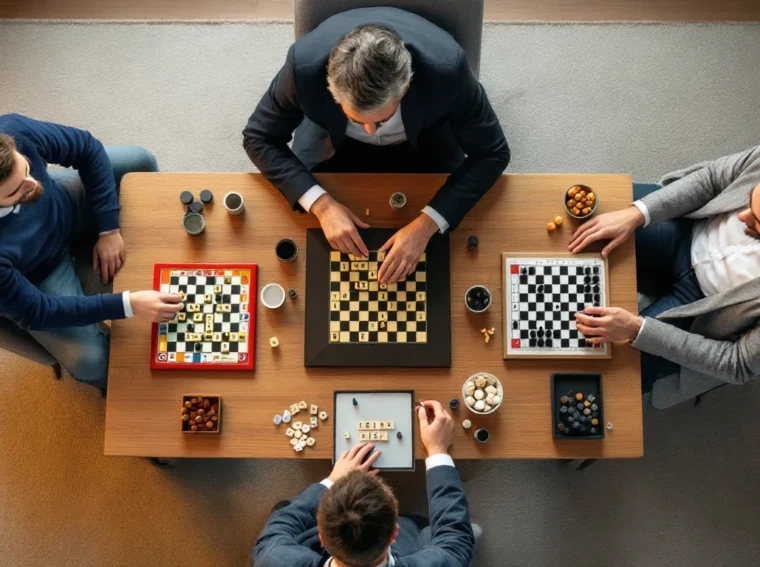
Board games have made a quiet comeback in recent years, and it’s not just nostalgia talking. From pandemic-era game nights to the rise of board game cafés, classic family board games are experiencing genuine cultural momentum. Unlike digital entertainment, which demands screens and algorithms, these timeless titles offer something increasingly rare: undivided attention around a shared table. Whether you’re rediscovering childhood favorites or introducing a new generation to gaming fundamentals, understanding the landscape of classic board games in 2026 means knowing what makes them tick, which versions are worth owning, and how to actually host a game night that doesn’t fizzle after round one. This guide breaks down everything you need to know about classic family board games, from the most iconic titles to hosting strategies that keep people engaged.
Key Takeaways
- Classic family board games offer genuine social engagement and skill development—including resource management, strategic thinking, and vocabulary—without screens or digital distractions.
- The most iconic classic board games like Monopoly, Scrabble, Chess, Checkers, Clue, and Risk have endured for decades because they prioritize replayability, balance accessibility with depth, and appeal across age groups.
- Choosing the right classic board game depends on audience age, skill variation, group interests, game duration, and social dynamics—test before committing to ensure everyone stays engaged.
- Quality matters when purchasing classic board games: retail options offer consistency, specialty stores provide expertise, and secondhand markets offer vintage editions at lower prices, but verify component completeness.
- Successful game nights require intentional atmosphere-setting—proper seating, adequate lighting, strategic snacks, and announced timing—combined with clear rule enforcement to maximize enjoyment and minimize frustration.
Why Classic Board Games Still Matter Today
In an era of algorithm-driven entertainment and endless streaming options, classic board games represent something almost radical: intentional socializing without digital mediation. Kids are experiencing record screen time, parents are battling engagement fatigue, and families are actively looking for offline activities that don’t require WiFi or a subscription service. Board games fill that gap.
These games teach valuable skills that stick. Playing Monopoly teaches resource management and negotiation. Chess sharpens tactical thinking. Scrabble expands vocabulary in a competitive but constructive way. Unlike passive entertainment, board games demand active participation, you’re making decisions, reading opponents, adapting strategies in real time.
There’s also the accessibility angle. Most classic board games have minimal barriers to entry: the rules are straightforward, the learning curve is gentle, and the barrier to age mixing is lower than it is for competitive video games. A 7-year-old and a 67-year-old can genuinely compete in the same game of checkers. That intergenerational appeal is becoming increasingly valuable to families seeking shared experiences.
The Evolution of Family Gaming
Board games didn’t emerge fully formed in the modern era, they’ve evolved significantly over decades, and understanding that evolution helps explain why certain titles endure while others fade.
The earliest classic board games date back centuries. Chess has roots in 6th-century India. Checkers evolved in southern France around 1100 AD. These games proved so elegant and balanced that they barely needed tweaking over hundreds of years. Then came the modern board game boom: Parker Brothers and Milton Bradley transformed gaming in the early 20th century, mass-producing games and making them household staples.
Monopoly (1935) changed the landscape entirely by commodifying the economic simulation game. Scrabble (1938) followed, democratizing word games. By the 1950s and 60s, board games were woven into American culture, family game night was an institution. Clue (1949), Risk (1959), and countless others solidified the genre.
What’s interesting is that the core designs of these games have aged remarkably well. Publishers have released updated versions, added house rules, and tweaked components, but the fundamental mechanics remain largely intact. The reason? They were designed for replayability and social interaction first, not trend-chasing. In 2026, that design philosophy feels almost countercultural, and it’s exactly why people return to these games.
The Most Iconic Classic Board Games
Monopoly: The Property Empire Builder
Monopoly is arguably the most universally recognized board game on the planet. Players move around a square board, buying properties, collecting rent, and trying to bankrupt opponents. The game teaches fundamental economic concepts, cash flow, investment, negotiation, and risk management, wrapped in a surprisingly addictive competitive framework.
Modern versions of Monopoly come in dozens of themed variants: Disney, Star Wars, local city editions, even dog-themed versions. The core game remains functionally identical across versions, though the 2022 and later editions introduced tokens like a rubber duck and a gamer console. A standard game takes 1-3 hours depending on player count and experience level: competitive players can push through in 45 minutes.
One caveat: casual players often don’t follow official rules, which makes games drag interminably. Most house rules actually speed things up. If you’re going to own Monopoly, learn the official rules or establish clear house rules upfront, it’s the difference between a tight 90-minute game and a soul-crushing 4-hour marathon.
Scrabble: The Word Game Champion
Scrabble is the word game. Players draw letter tiles, place them on a grid-based board, and score points based on word validity and square bonuses. The game merges vocabulary, strategy, and luck, you’re limited by the tiles you draw, but skilled players can work around bad draws.
The competitive Scrabble community is surprisingly intense. Tournament players use specialized dictionaries (the Official Scrabble Players Dictionary or OSPD), memorize obscure high-value words, and employ complex strategic positioning. Casual play is far more forgiving: nobody’s going to challenge you for playing “YEAH” instead of a seven-letter bingo.
Game duration is typically 45 minutes to an hour. Scrabble works better with 2-4 players: beyond that, downtime stretches. A solid tip for family play: keep a dictionary handy and establish whether obscure words are fair game before starting. The optional tournament dictionary rules can amp up difficulty for experienced players.
Chess: The Game of Strategy
Chess is the standard-bearer for competitive depth. Two players, 16 pieces each, infinite combinations. Even though being centuries old, Chess remains the benchmark for strategic thinking. A casual game takes 20-45 minutes: tournament games use time clocks and can extend hours.
The barrier to entry is modest, learn the pieces, learn how they move, and you can play a legal game. The barrier to mastery is essentially infinite. That scalability is why Chess endures. A beginner and a grandmaster can enjoy playing each other: the gap just informs the outcome.
Physical board quality matters more for Chess than most games. Cheap boards with wobbly pieces are frustrating. Mid-range wooden sets (under $50) are solid: beyond that, you’re paying for aesthetics and collector value. Online chess platforms like Lichess have exploded in popularity, but physical play remains satisfying and distraction-free.
Checkers: Simple Yet Engaging
Checkers (called Draughts in some regions) distills strategic depth from simple rules. 12 pieces per side, orthogonal movement, jump-based captures, and promotion to kings that move backward. Games are faster than Chess, typically 20-30 minutes, making Checkers accessible for younger players while still offering competitive depth.
The elegance of Checkers is that even though the simplicity, the game is nearly solved. Computer analysis has mapped the entire game tree, revealing that perfect play from both sides leads to a draw. Yet humans still get meaningful competition and learning from the game. It’s a useful gateway to strategic thinking before tackling Chess.
Clue: The Mystery Solving Classic
Clue (called Cluedo outside North America) is deduction wrapped in a mystery-solving framework. Players move around a mansion, gathering clues about who committed a murder, with what weapon, and in which room. The core mechanic is elegant: eliminate possibilities until only one solution remains.
Clue works best with 3-6 players. Two-player games underutilize the mechanic: more than six players means excessive downtime. Games typically run 45 minutes to an hour. The newer 2016 redesign expanded the solution possibilities and added character variation, keeping things fresher across repeated plays.
Clue is excellent for family play because the outcome is determined by deductive reasoning and luck, not cutthroat economic warfare. It also involves less downtime drama than Monopoly and requires less mastery than Chess.
Risk: World Domination Strategy
Risk takes Monopoly’s negotiation framework and wraps it in military conquest. Players control armies, attack territories, and attempt to dominate the world. The game combines strategy, luck (via dice), and diplomacy. Gameplay can extend 2-4 hours depending on player count and experience.
Risk is the game that lasts longest on this list, which is both a strength and weakness. The extended playtime allows for narrative arcs, alliances form, betrayals happen, underdogs stage comebacks. But it also means casual players sometimes lose engagement by hour three.
Modern Risk variants speed things up. Risk 2210 AD (out of print but available secondhand) and the 2008 redesign both streamline rules and reduce playtime. If you love the negotiation and strategy but hate the length, those variants are worth hunting down.
How to Choose the Right Classic Board Game for Your Family
Consider Your Audience
Game selection starts with honest assessment of your players. A Chess set gathering dust because your household prefers word games is wasted shelf space. Consider:
Age appropriateness: Most classic games have minimum age recommendations. Monopoly officially recommends 8+, though the full ruleset is complex for younger kids. Scrabble requires reading fluency. Checkers and Chess work for younger kids with simplified rule sets. Risk suits 10+. Younger kids (5-7) benefit from simpler games like Checkers or Clue, which involve faster rounds and less downtime.
Skill variation: Do you have experienced players and newcomers? Games like Scrabble and Chess favor expertise, which can frustrate new players. Monopoly, Risk, and Clue involve enough luck and negotiation that skill gaps don’t completely overshadow newcomers.
Interest alignment: Forcing an outdoor kid into a six-hour Risk marathon is a setup for failure. Know whether your group gravitates toward word games, strategy, economic simulation, or mystery-solving. Personality matters too, competitive groups thrive on Chess or Scrabble: collaborative groups might prefer games with negotiation mechanics.
Game Duration and Complexity
Game length is underrated in household game selection. A 2-hour Monopoly game feels great: a 4-hour slog feels punishing. Be realistic:
Short games (20-45 minutes): Chess (with a timer), Checkers, Scrabble, quick Clue rounds. Good for weeknight play or when attention spans are stretched.
Medium games (45 minutes to 2 hours): Monopoly (with strict official rules), Risk (with house rules limiting round duration), longer Clue games with full deduction.
Long games (2+ hours): Risk with full ruleset, extended Monopoly sessions, competitive Chess tournaments.
For rule complexity, classic games sit on a spectrum. Checkers and Clue have simple rulesets (learnable in 5 minutes). Monopoly and Scrabble have moderate complexity (30 minutes to learn full rules). Chess and Risk have high complexity (hours to truly master, though basic play is learnable). Match complexity to your household’s appetite for rulebook reading.
Social Dynamics and Engagement
The best game is the one everyone wants to play. Consider social fit:
Negotiation-heavy games like Monopoly and Risk create memorable moments because they involve coalition-building, betrayals, and trash talk. They’re social theater. But they also require players to handle losing gracefully and can breed resentment if someone gets eliminated early.
Individual competition like Chess, Scrabble, and Checkers focuses on head-to-head excellence. They’re less about negotiation and more about outplaying an opponent. Good for players who want clear metrics of skill.
Cooperative elements are minimal in classic games, but Clue has a slight cooperative flavor, everyone’s solving the same mystery. This reduces resentment toward “kingmaking” (where one player effectively decides the winner) that sometimes emerges in Monopoly.
Playtest before committing. If possible, borrow a game or visit a board game café where you can try before buying. One afternoon of testing beats months of regret.
Where to Buy and Collect Classic Board Games
Classic board games are widely available, but sourcing matters. New boxes carry official versions: used markets offer vintage editions and older artwork.
Retail options: Target, Walmart, Amazon, and Barnes & Noble stock standard editions of Monopoly, Scrabble, Chess, Checkers, and Clue. Prices are consistent, $20-40 for most classic titles, though themed variants sometimes run higher. Availability is guaranteed, but selection is limited to popular versions.
Specialty stores: Board game cafés and dedicated board game shops (if available locally) offer curated selections and often carry multiple editions of the same game. Staff can provide recommendations. Prices may be slightly higher, but the expertise is valuable.
Secondhand markets: Facebook Marketplace, eBay, local thrift stores, and estate sales are treasure troves for vintage board games. You’ll find older Monopoly editions with original artwork, complete Risk sets from the 1970s, and collector’s Chess sets. Prices are typically 50-70% of retail. The tradeoff: condition varies, components might be worn, and you need patience to find what you want.
Collector’s perspective: If you’re collecting multiple editions of the same game (different Monopoly versions, for instance), vintage markets are essential. Collector’s editions and first-run printings have value for enthusiasts. But for casual family play, new retail versions are simpler and more reliable.
One practical tip: verify component completeness before purchasing secondhand. Missing pieces render Monopoly unusable and devalue vintage sets substantially. Request photos from sellers and ask specifically about completeness.
Digital vs. Physical Versions
The digital board game revolution is real. Apps and online platforms offer convenience, but they sacrifice the social core that makes physical games special.
Physical games excel at: Social presence (you’re reading faces, engaging in real-time banter, building memories), no screen fatigue, no WiFi dependency, and tactile satisfaction (moving pieces, rolling dice). Physical games feel like events, you’re gathering people intentionally.
Digital versions offer: Convenience (play anytime with random opponents or friends online), automated rule enforcement (no arguments about legality), faster gameplay (no setup or cleanup), and accessibility (board game apps cost $2-15 versus $30-50 for physical sets).
For Chess, the digital ecosystem is robust. Platforms like Lichess and Chess.com offer infinite opponents, training tools, and competitive ladders. Yet tournament Chess remains primarily physical, there’s something about moving pieces on a real board that appeals to serious players.
Monopoly, Scrabble, and Risk have digital versions on mobile and console platforms, but they’re often simplified or monetized (with battle passes or cosmetics). Purists prefer physical versions.
Clue apps exist but lack the deduction mechanics that make physical play engaging. Digital Clue is essentially a randomized mystery generator, not a deduction game.
The honest take: digital versions are supplements, not replacements. Use them for convenience or skill development (Chess training apps are excellent). But for actual social game nights, physical boards are irreplaceable. The gaming community increasingly recognizes that classic board games offer something digital can’t: undivided attention and genuine presence.
Modern Twists on Classic Games
Publishers understand that classic games have cultural staying power, so they’ve released modernized versions that honor the original while tweaking mechanics or aesthetics.
Monopoly variants are the most prolific. Themed versions exist for nearly every franchise, Disney, Marvel, Lord of the Rings, local cities. These aren’t mechanically different: they’re cosmetic. More interesting are strategic variants like Monopoly Plus (console version with house rules baked in) or homebrew adaptations that speed up gameplay.
Scrabble received a substantial update in the 2010s with the introduction of point multipliers and challenge mechanics in newer editions. The core game remained identical, but the visual redesign and clarified rules made it more accessible.
Chess sees constant innovation in variants like Chess960 (random starting position), three-player chess, and bughouse (four players, two boards). These aren’t “twists” on the original but rather explorations of what’s possible when you modify the foundation. Serious players explore these: casual players stick with standard rules.
Risk saw significant modernization with Risk 2210 AD and later editions that introduced simultaneous order selection and reduced playtime. These made the game more strategic and less luck-dependent.
The most interesting development is the emergence of “legacy” game design, where a single game box evolves across multiple play sessions with permanent changes. Clue received a legacy adaptation that changed how the game plays over a campaign. These aren’t quite the same as classic board games, but they represent how designers are building on classic foundations.
The consensus: modern twists are worth exploring if they address pain points in the original design (length in Risk, downtime in multi-player Monopoly). But the originals remain superior for purists and casual play.
Hosting Memorable Game Nights: Tips and Strategies
Setting the Atmosphere
The physical environment shapes how a game night unfolds. Details matter:
Seating and table setup: A circular or oval table promotes conversation and prevents anyone from feeling sidelined. Ensure everyone can see the board and reach game pieces comfortably. Avoid standing-height tables for games like Monopoly that require sustained focus, people tire faster.
Lighting and distractions: Use adequate overhead lighting so players can read cards, see dice rolls, and reference boards. Dim lighting creates intimacy but makes games frustrating. Eliminate major distractions, phones face-down (or better, in another room), TV off. People lose interest fast if they can see an alternative.
Snacks and beverages: Food and drink elevate game nights from activity to event. Light snacks (chips, pretzels) beat heavy meals that require forks and napkins. Beverages should be easy to manage, cups with lids prevent board-game disasters. Avoid sticky or greasy snacks near the board itself. Coffee or tea extends playtime: alcohol loosens tension but can make competitive games ugly.
Timing: Start early enough that games finish before people are exhausted. A 9 PM start for a 2-hour game ends at 11 PM, people lose focus in the final rounds. Late afternoon or early evening (4-8 PM) works best. Announce expected duration upfront so people plan accordingly.
Organizing Tournaments and Competitions
For households or friend groups that want recurring game nights, tournaments add structure and stakes:
Round-robin tournaments: Everyone plays everyone else once. Works best with 4-6 players and shorter games like Chess or Checkers. Produces clear rankings and ensures every pairing happens. Tracking scores in a shared spreadsheet or notebook adds accountability.
Bracket tournaments: Single-elimination or double-elimination formats work for larger groups or longer games. More dramatic (winner advances, loser is out or gets a second chance), but less fair, a good player might face a better player in round one and get eliminated unfairly. Best for social settings where drama is part of the fun.
League play: Recurring weekly or biweekly games where points accumulate over a season. Players enjoy progression and rivalry. Use a simple point system (3 points for win, 1 for draw, 0 for loss in Chess: overall placement in Monopoly). Publish standings weekly to maintain engagement.
House rules and fair play: Establish rules upfront and enforce them consistently. For Monopoly, clarify how house rules affect the game (no free parking payouts speeds things up: “get out of jail free” house rules slow it down). For Scrabble, decide whether you’re using the official dictionary and whether challenge phrases matter. Consistency prevents arguments mid-tournament.
Prizes and stakes: Physical prizes (trophies, certificates, bragging rights) add weight to competition. Monetary stakes can increase intensity but risk breeding resentment. Light stakes ($1-2 per player) work: high stakes damage friendships. The best prize is simply being crowned champion, most people play for recognition and respect.
Tournaments work best with games that support it naturally. Chess and Scrabble are tournament staples with established formats. Monopoly and Risk are trickier in tournament settings because games take longer and luck plays a significant role, elite players win more often, but variance means upsets happen. Design your tournament format accordingly.
One final thought: the best game nights balance competition with socializing. If people are too focused on winning, the atmosphere becomes tense and fun evaporates. Allow banter, celebrate good plays by opponents, and remind players that the point is time together, with competition as the vehicle.
Conclusion
Classic family board games represent something increasingly rare in 2026: technology-free experiences built around genuine human interaction. They’re not relics of the past, they’re deliberate choices made by families and friend groups seeking alternatives to screens and algorithms.
Whether you’re drawn to the strategic depth of Chess, the economic simulation of Monopoly, the word mastery of Scrabble, or the deduction mechanics of Clue, these games endure because they balance accessibility with depth. A newcomer can enjoy Monopoly in their first game: someone playing for the 100th time still discovers nuances in negotiation and timing.
The practical pathway forward: identify which game matches your household’s interests and social dynamics, invest in a quality physical set, establish clear rules upfront, and create the conditions for memorable play. Host game nights deliberately, not as passive entertainment, but as intentional events. The returns on that investment compound across years of shared moments, repeated victories, celebrated upsets, and the simple satisfaction of gathering around a table with people you care about.
In a world optimized for engagement metrics and algorithmic recommendations, classic board games offer something more valuable: the guarantee that tonight, at least, everyone will be fully present.