
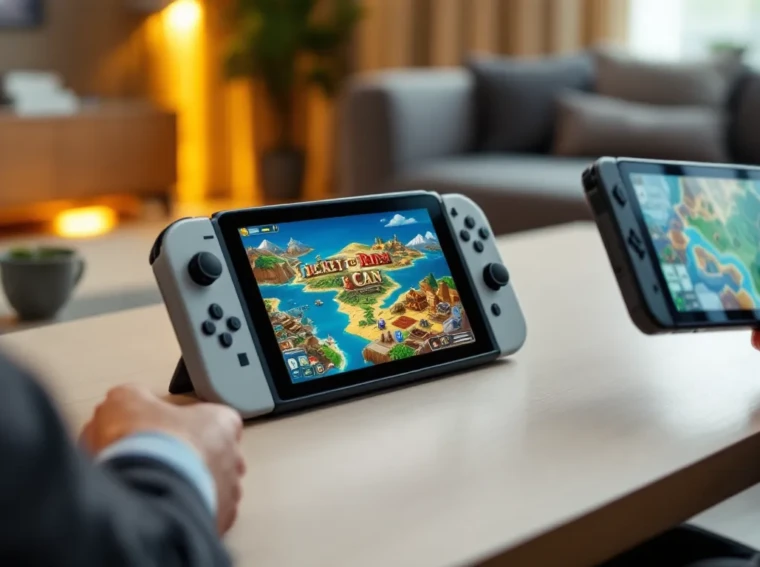
Board games on Nintendo Switch have become a hidden gem in the gaming world. Whether you’re a casual player looking to unwind or a competitive gamer seeking your next strategic challenge, the Switch’s library of board games delivers experiences that bridge the gap between traditional tabletop gaming and digital convenience. Unlike their physical counterparts, Nintendo Switch board games let you play anytime, anywhere, on your TV, handheld, or tabletop mode, without needing a full game setup or an opponent ready in your living room. This guide covers everything you need to know about finding, choosing, and mastering the best Nintendo Switch board games available in 2026.
Key Takeaways
- Nintendo Switch board games combine the strategic depth and social interaction of physical board games with digital convenience, allowing you to play anytime, anywhere on TV, handheld, or tabletop mode.
- Top Nintendo Switch board games span multiple genres—from strategy games like Ticket to Ride and Catan to party games like Mario Party Superstars and cooperative adventures like Pandemic—ensuring there’s something for every player type and skill level.
- Choose your Nintendo Switch board game based on player count, game length, and your interests, prioritizing official ports for consistency and support while checking online multiplayer communities before buying competitive titles.
- Official ports offer superior optimization, digital conveniences like rule automation and online play, while emulated versions prioritize authenticity to physical games but with less predictable quality control.
- Maximize your Nintendo Switch board games by mastering controls through tutorials, utilizing online multiplayer for daily play opportunities, and investing in expansions that enhance games you already play regularly.
What Are Nintendo Switch Board Games?
Nintendo Switch board games are digital adaptations of classic and contemporary board games designed specifically for Nintendo’s hybrid console. These titles replicate the core mechanics of physical board games, dice rolls, card draws, turn-based strategy, and player interactions, but deliver them through the Switch’s flexible hardware.
They range from faithful recreations of timeless classics like Chess and Checkers to fully licensed digital versions of modern hits like Ticket to Ride and Catan. Some are exclusive digital experiences that use board game logic but exist only on the Switch. The beauty of these games is they handle all the tedious admin work, keeping score, enforcing rules, managing timers, and tracking game state, automatically.
Most Nintendo Switch board games support multiple play modes: single-player against AI, local multiplayer (where players take turns on the same console), and online multiplayer (playing against opponents worldwide). Some even feature cross-platform play, letting Switch players compete with PC or mobile users.
Why Board Games on Nintendo Switch Stand Out
Board games have always been about connection and strategy, but Nintendo Switch board games enhance that experience in ways physical games simply can’t. Here’s what makes them exceptional.
Convenience and Portability
Physical board games demand real estate. Gloomhaven, Twilight Imperium, or even Ticket to Ride require a table, storage space, and setup time measured in minutes. Nintendo Switch board games eliminate all of that friction. You can start a game of Catan on your commute, pause it, and resume hours later without losing your save state. Handheld mode means you’re not tethered to a TV, while tabletop mode transforms your Switch into a shared gaming device perfect for quick sessions.
Portability is especially valuable for travel. Pack a single console instead of a game box the size of a brick. Airport lounges, hotel rooms, and camping trips become prime gaming real estate.
Social Gaming Without Physical Setup
Online multiplayer has revolutionized board gaming. Instead of waiting for friends to gather on a specific night, Nintendo Switch board games let you play on your schedule. A turn might take seconds or minutes, you submit your move, and your opponent plays whenever they’re ready, sometimes hours or days later. This asynchronous gameplay transforms board games from “event gaming” into something you weave into your daily routine.
Local multiplayer still thrives too. Pass the controller, use separate controllers, or play tabletop style where everyone sees the board. For couch co-op sessions, nothing beats the social intimacy of board games, they’re inherently turn-based, so everyone gets moments to think and celebrate or groan at outcomes.
Variety of Genres and Gameplay Styles
The Nintendo Switch board game library spans everything from pure strategy (Chess, Go) to party chaos (Mario Party Superstars) to cooperative adventures (Pandemic). This diversity means there’s genuinely something for every taste and skill level.
Strategy enthusiasts find deep, crunchy games where every decision matters. Party gamers get loud, laugh-out-loud experiences. Puzzle lovers get brain-teasers that scale from relaxing to brutal. Cooperative players can tackle campaigns together. The Switch has largely escaped the “hardcore board games only” stigma, it’s home to both cerebral euro-games and light, accessible titles perfect for non-gamers.
Top Nintendo Switch Board Games to Play Right Now
The Nintendo Switch eShop hosts hundreds of board games, but not all are created equal. These recommendations focus on quality, replayability, and value in 2026.
Strategy Games
Ticket to Ride, The gold standard for digital board game ports. You’re building railway routes across North America (or other maps) by claiming route cards and collecting matching colored train tokens. The Switch version includes all major expansions and single-player AI that doesn’t cheat but plays competently. Supports 2-5 players locally or online. One complete game runs 30-60 minutes depending on player count. Cross-platform play with PC and mobile versions exists on the original board but isn’t available in this version.
Catan, The modern classic that birthed the “eurogame” phenomenon. Roll dice, settle hexes, trade resources, and build settlements and cities. The Switch port supports 2-4 players, includes all official expansions, and features robust AI. Games typically run 45-90 minutes. The game has genuine randomness (dice rolls, development card draws) so RNG matters, but strategic play consistently beats luck.
Splendor, A lighter strategy game that scratches the engine-building itch in 20-30 minutes. Collect gems to purchase developments and attract nobles. The gem management is deceptively deep, you’ll see pros and casuals playing it with equal enthusiasm. Supports 1-4 players and runs smoothly on handheld.
Party and Social Games
Mario Party Superstars, A celebration of the Mario Party franchise spanning six classic N64 entries. 100 minigames, extensive board variety, and incredible local multiplayer shenanigans. Online mode is turn-based so no input lag nightmares. Solo mode lets you grind through boards against AI. If you want couch chaos and betrayal, this delivers.
Jackbox Party Packs, While technically not traditional board games, party packs deliver board game energy: simple rules, social interaction, and laughter. Players answer prompts, vote, draw, or strategize across quick rounds. Multiple volumes available (1-7), each with unique minigames. Supports up to 8-10 players depending on the pack. Streaming-friendly because one player uses the Switch while others play on their phones or tablets.
Quiplash (part of Jackbox Party Pack 3 and 4), A rapid-fire comedy writing game. You answer prompts, players vote on their favorite responses, and absurdity ensues. No board-game stats or strategy, pure fun. Games run 10-20 minutes per round.
Puzzle and Brain Teaser Games
Puyo Puyo Tetris and Puyo Puyo Tetris 2, Hybrid puzzle games combining two distinct rule sets. Tetris is a classic: stack falling blocks. Puyo Puyo chains colored blobs. Tetris 2 adds more depth with modern Tetris mechanics (piece hold, 7-bag system). Both support single-player, local, and online multiplayer. TTK (time-to-kill) matters in competitive modes, reflexes and pattern recognition determine winners.
Picross S Series (Picross S1-S10), Nonogram puzzles where you uncover pixel art by solving number clues in rows and columns. Each game contains hundreds of puzzles scaling from beginner to brain-meltingly hard. Solo-focused but utterly addictive. Each game is under $10 and offers 50-200+ hours of content depending on difficulty tolerance.
Unpacking, A zen puzzle game about organizing belongings into spaces. No timers, no stress, just click items and arrange them logically in your new homes across different life stages. Relaxing, charming, and surprisingly emotional. Story unfolds through environmental storytelling. 4-6 hour completion time.
Cooperative Adventure Games
Pandemic, The definitive cooperative board game where 2-4 players work together to cure diseases before they overwhelm the world. The Switch version includes all expansions and solo mode (you control multiple roles). Difficulty scales from beginner to brutal. Games run 30-60 minutes. Every playthrough feels different because disease outbreaks are semi-random.
Gloomhaven: Jaws of the Lion, A dungeon-crawling tactical game for 1-4 players. Streamlined compared to the physical version but retaining strategic depth. Campaign persistence carries across sessions. Combat involves initiative, positioning, and power management. Expect 40-100 hours for a full campaign.
Spiritfarer: Farewell Edition, Not a traditional board game, but mechanics mirror adventure board games with resource management, relationship building, and narrative stakes. It’s a puzzle-adventure about ferrying spirits to the afterlife. Emotional, beautiful, and thoroughly replayable. Story-driven gameplay won’t appeal to pure mechanics enthusiasts, but it’s exceptional for players wanting narrative depth.
How to Choose the Right Board Game for Your Switch
With hundreds of options, choosing the right game prevents buyers’ remorse. These filters help narrow the field.
Consider Your Player Count
Board games vary wildly in player capacity. Solo games shine when you’re playing alone, roguelikes like Slay the Spire, puzzle games like Picross, or campaign games like Gloomhaven: Jaws of the Lion. If you’re buying exclusively for multiplayer, check whether the game supports local multiplayer, online, or both.
Local multiplayer (everyone on the same Switch) is perfect for couch gaming. Tabletop mode works beautifully for this. Some games let multiple Switch consoles connect for expanded player counts (wireless play), but fewer developers support this nowadays.
Online multiplayer depends on whether your opponent pool matters. Competitive games like Puyo Puyo Tetris 2 or Mario Party Superstars have active matchmaking. Turn-based strategy games like Ticket to Ride have smaller but dedicated communities. Check player populations before buying if online matters to you.
Asymmetrical multiplayer (where players have different roles or capabilities) exists in games like Coup or Love Letter, adding depth to competitive play.
Match Games to Your Interests
Board game preferences typically fall into categories. Strategy enthusiasts want games where decisions compound: Catan, Splendor, Ticket to Ride. These reward planning and resource management.
Party players want quick, social games with low barriers to entry: Mario Party Superstars, Jackbox packs, Bing Bong Bash. Rules should be learnable in minutes.
Competitive gamers need games with clear skill expression, where better players consistently win: Puyo Puyo Tetris 2, Chess, Tetris Effect. Avoid pure-RNG games if this is your crowd.
Relaxation seekers benefit from zen games without timers or failure states: Unpacking, Spiritfarer, ambient puzzle games. Stress shouldn’t be involved.
Campaign players want persistent progression: Gloomhaven: Jaws of the Lion, Monster Train, Slay the Spire. Character growth and narrative continuity matter.
Check Game Length and Commitment
Game length exists on a spectrum. Quick games (under 30 minutes) include Quiplash, Love Letter, and Puyo Puyo Tetris rounds. Ideal for quick sessions or travel.
Medium games (30-90 minutes) describe most strategy and party games: Ticket to Ride, Catan, Mario Party Superstars. They fit nicely into evening gaming sessions.
Long games (90+ minutes) include campaign entries like Gloomhaven or Pandemic. Commit mentally and schedule appropriate time.
Permanent commitment games are roguelikes and puzzle collections that support indefinite play. Slay the Spire and Picross have no “end state,” which some players love and others find directionless.
Board Game Emulation vs. Official Ports: What’s the Difference?
The Switch hosts both licensed board game ports and emulated versions. Understanding the distinction matters for quality assurance and feature availability.
Official ports are developed specifically for the Switch (or adapted from other digital platforms). Developers license the board game IP, rebuild the game for Switch hardware, and add digital conveniences: rule automation, AI opponents, online play, save states, and tutorials. Ticket to Ride, Catan, Pandemic, and Splendor are official ports. They receive support and updates from their publishers.
Emulated versions are software recreations mimicking the physical game as closely as possible. They’re often community-created or publisher-approved recreations. Quality varies. Some emulations beautifully capture board game feel while automating tedious admin. Others suffer from awkward digital translations of physical interactions. Emulation sometimes means less polished UI and missing features like online play, but emulated games occasionally match or exceed official ports in authenticity.
From a practical standpoint: official ports offer consistency, support, and digital optimization. They justify their price by adding genuine digital value beyond a straight digital copy. Emulations prioritize authenticity and sometimes cost less, but quality control is less predictable.
For your library, prioritize official ports of major titles. Explore emulated niche games if they’ve earned community goodwill. Reviews on Nintendo Life and community forums surface quality issues before you buy.
Tips for Getting the Most Out of Your Switch Board Games
Owning board games is step one. Playing them competently and repeatedly is what builds real value.
Master the Controls and Interface
Digital board games add learning curves beyond the physical rules. Different games map controls differently, some use button combinations for navigation, others rely on cursor movement and A/B selections. Spend 5-10 minutes in tutorials or first-time setup. It’s tedious but prevents fumbling during actual play.
UI design varies dramatically. Ticket to Ride feels intuitive: Gloomhaven has a denser interface. Practice a few turns against AI to build muscle memory before playing multiplayer.
Underlying mechanics stay consistent across physical and digital versions, so if you already know the rules, digital control mastery is your only barrier to good play.
Use Online Multiplayer Features
Online multiplayer transforms board games from occasional couch events into daily play. Turn-based games especially benefit, submit your move when convenient, your opponent plays whenever they’re ready. Communities are often smaller than console shooters but tight-knit and welcoming.
Start with ranked play if rankings matter to you, or casual queues if you’re learning. Different games have different community sizes. Puyo Puyo Tetris 2 has healthy matchmaking: niche euro-games might have slower queue times.
Adding friends amplifies online play. Play asynchronous games with your friend group, coordinate sessions, and rematch regularly. Friendships built through repeated competitive games run deep in gaming culture.
Explore Expansions and DLC Content
Many Switch board games offer DLC expansion packs. Ticket to Ride has regional maps (Europe, Nordic countries, Switzerland). Catan includes expansions like Seafarers and Cities & Knights that add mechanics and gameplay depth.
Expansions worth buying enhance games you’re already playing regularly. Don’t buy all DLC expecting to use it, focus on expansions aligned with your actual play style. Read reviews on IGN or Twinfinite before committing to expensive DLC.
Some games include DLC cosmetics (cosmetic changes to boards or pieces) that don’t affect gameplay. These are personal preference, some players enjoy customization, others skip them. Focus on mechanical expansions if your budget is tight.
Conclusion
Nintendo Switch board games occupy a unique space in gaming: they preserve everything beloved about physical board games while eliminating logistical friction. Whether you’re seeking strategic depth, social chaos, meditative puzzles, or cooperative adventures, the Switch library delivers remarkable variety.
Start with games matching your interests and player count. Invest in official ports of well-known titles, they’re generally optimized and supported. Explore online multiplayer to find lasting communities. And remember: the best board game is the one you’ll actually play repeatedly.
The Switch’s hybrid nature means board games fit perfectly into handheld, docked, or tabletop contexts. Your commute, your living room, your vacation, all become gaming opportunities. That flexibility, paired with growing publisher support and expanding libraries, makes 2026 an exceptional time to explore 5 Underrated Nintendo Switch Games and discover experiences that bridge the tabletop and digital worlds.
Start with your first game this week. You’ll understand the appeal immediately.