
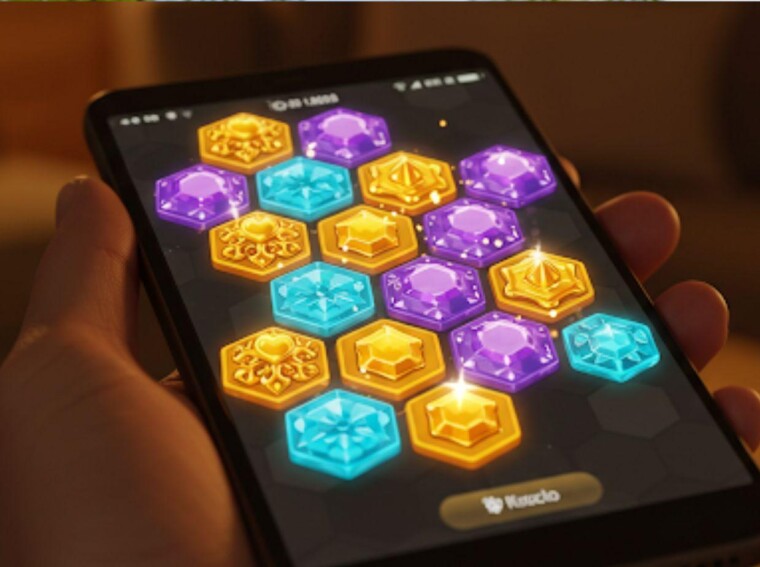
If you have ever spent a long train journey or a quiet evening on the sofa sliding colourful shapes around a grid on your phone, you are in very good company. For well over a decade, match-3 puzzles have reigned supreme as some of the most popular casual pastimes in the country. We have all experienced that satisfying little moment when you slide a sparkling blue sapphire to line it up with two others, watch them disappear in a tiny burst of light, and feel a quiet sense of satisfaction as a new set of shapes cascades down to fill the empty spaces. But what is it about this specific cycle of actions that keeps us coming back?
The appeal lies deep within our natural human love for order, symmetry, and quick visual feedback. When we tidy up a messy grid, our minds treat it as a small, pleasing victory. It is the digital equivalent of organising a cluttered shelf, except it comes with lovely animations and a pleasant sound design. The cascading mechanic, where clearing one group of items triggers a chain reaction of falling shapes, adds an extra layer of anticipation. You are not just celebrating the match you made; you are watching to see what the falling blocks will create next. This satisfying flow has created an incredibly loyal audience of players who appreciate clever mechanics, clever layouts, and a relaxing pace over stressful, fast-paced action.
As mobile technology has grown, so too has the sophistication of these puzzle formats. We have seen simple grids evolve into complex boards with unique goals, blocking tiles, and special power-ups. Yet, the core appeal remains completely unchanged. It is accessible, easy to understand, and visually rewarding. It is no surprise, then, that this exact design philosophy has begun to heavily influence other areas of online entertainment, most notably the modern world of online slots.
Decoding the Cluster-Pay Revolution: How Modern Slots Mimic Grid-Based Puzzles
For decades, traditional slot machines relied on a very simple and somewhat rigid structure. You had three or five spinning reels, and you needed to align matching symbols across specific horizontal or diagonal paylines. If you did not land them in those precise patterns, the spin was simply over. For modern players who grew up on the fluid, dynamic grids of casual mobile games, this traditional setup can feel a bit static and old-fashioned.
This is where the cluster-pay mechanic comes into play, completely changing the game. This design completely dismantles the traditional payline system, replacing it with a format that feels instantly familiar to anyone who has ever played a casual mobile puzzle. Instead of worrying about left-to-right lines, cluster-pay games reward you when a group of identical symbols land touching each other anywhere on the grid. Typically, you need a cluster of five or more matching symbols, connected either horizontally or vertically, to trigger a successful match.
When a cluster forms, the real magic begins. Rather than simply spinning the reels again, many of these modern games utilise a grid-clearing mechanic. The winning symbols disappear, and new symbols tumble down from the top of the screen to fill the gaps. If those new symbols form another cluster, the process repeats itself. This means a single spin can trigger a beautiful sequence of cascades, mimicking the exact visual feedback loop that made casual match-3 games a global phenomenon. It is a brilliant example of cross-genre design, where the line between casual puzzle-solving and real-stakes play becomes beautifully blurred.
Why Cascading Reels and Falling Blocks Feel Familiar to Traditional Gamers
This transition feels incredibly natural because these underlying mechanics have deep roots in classic gaming history. Long before smartphones became a staple of daily life, many of us spent hours playing retro falling-block puzzles on early desktop computers or handheld consoles. We grew up understanding the basic physics of these games: blocks fall, our job is to arrange them, clear them, and keep the grid from filling up.
When a traditional puzzle player sits down to play a modern slot featuring cascading reels, they do not need to read a lengthy manual or spend time learning complicated, abstract rules. The visual language is already part of their gaming history. They see a grid, they see symbols falling from the top of the screen, and they instantly understand the mechanics.
This familiarity lowers the barrier to entry significantly. Instead of feeling like they are stepping into an alien environment with unfamiliar terms and confusing interfaces, casual players find themselves in a space that feels comfortable and recognisable. The mechanical rhythm of a cascading slot is almost identical to that of a classic block-dropping puzzle, making the transition feel like a natural next step rather than a complete leap into the unknown.
Next-Gen Mobile UX: Portability and Intuitive Touch Controls in Casual iGaming
A massive factor in this migration is the evolution of mobile user experience. The way we interact with our handheld devices has fundamentally shaped the games we play. Traditional online slots were originally designed for large, landscape-oriented desktop screens. Casual puzzle games, however, were built from the ground up for the modern smartphone, prioritising portrait mode and simple, one-handed play.
Recognising this shift, modern developers have redesigned their platforms to align with these casual habits. Grid-based cluster-pay games are perfectly suited for portrait layouts. They fill the screen beautifully, keeping the action central and easy to see while you are standing on a bus, waiting for a kettle to boil, or relaxing on the sofa.
Furthermore, the touch controls feel incredibly intuitive. While you might not be manually dragging symbols as you would in a standard match-3 game, the act of tapping to start a spin and watching the tactile, gravity-defying drops feels organic and responsive. The buttons are placed within easy reach of your thumb, and the animations are buttery smooth, matching the high-quality presentation we expect from premium mobile applications. It is this dedication to seamless, mobile-first design that has made casual iGaming feel like a premium, modern pastime rather than a clunky relic of the desktop era.
Where to Experience Modern Hybrid Play: Discovering Modern Interactive Catalogs
If you are keen to see how these two worlds have merged, you do not have to look very far. The gaming landscape is currently filled with brilliant titles that celebrate this hybrid design. By blending the casual, relaxing patterns of grid-based puzzles with the suspense of real-stakes gaming, developers have created a whole new genre of entertainment.
To explore how these innovations look and feel in practice, you can check out the range of new slots at Virgin Games, where you will find an array of titles featuring cascading reels, cluster-pay mechanics, and interactive grid play. These games show just how far the industry has come, offering a beautifully polished experience that feels like a natural extension of your favourite mobile puzzles.
When exploring these modern hybrid games, it is always vital to keep your gaming healthy and enjoyable. Remember to set sensible limits, take regular breaks, and treat these games as a form of light entertainment. Keep it fun, stay in control, and play responsibly.