
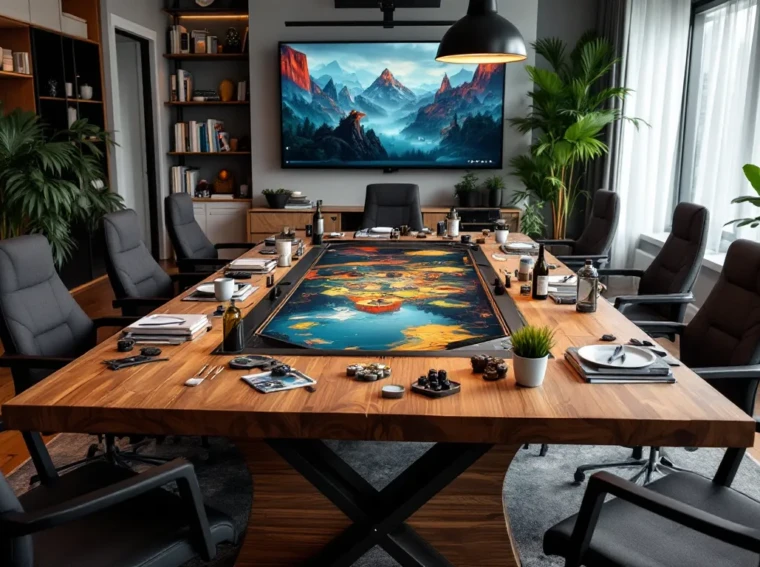
Finding a great RPG board game feels like unlocking a new skill, it opens up entire worlds of storytelling, strategy, and social connection that digital games can’t quite replicate. Whether you’re running a Friday night campaign with friends or diving into a solo adventure after work, the best RPG board games deliver exactly what you’re looking for: meaningful choices, memorable characters, and sessions that people actually want to come back to. The market’s expanded massively since 2024, with designers pushing the boundaries on what tabletop RPGs can do. We’re talking about games that blend deep mechanical systems with narrative weight, flexible difficulty scaling, and campaigns that feel genuinely rewarding over dozens of sessions. This guide breaks down the standout RPG board games worth your time and table space, from gateway experiences for newcomers to crushing complexity for veterans hunting that next gameplay fix.
Key Takeaways
- The best RPG board games balance meaningful storytelling, character development, and complex mechanical systems that reward players over dozens of sessions.
- Entry-level games like Mice and Mystics and Sword & Sorcery teach new players gradually without sacrificing charm, while expert options like Gloomhaven and Spirit Island deliver depth for seasoned adventurers.
- Solo and cooperative RPG board games have evolved dramatically, offering genuine campaigns like Arkham Horror: The Card Game and Spirit Island that don’t require a game master.
- Your group’s actual preferences—player count, session duration, table space, and thematic tone—matter more than mechanical sophistication when choosing an RPG board game.
- Budget-friendly options like One Deck Dungeon ($20–25) and print-and-play systems prove that excellent RPG gameplay doesn’t require an $80+ investment or premium components.
What Makes an RPG Board Game Stand Out
Not every board game with character sheets and dice rolling hits the RPG sweet spot. The best ones nail a specific combination of elements that keep players invested long-term.
Story-Driven Gameplay and Character Development
A solid RPG board game needs to make you care about what happens next. This means the narrative can’t feel tacked on, it has to be woven into every decision. When you’re rolling attack dice, you’re not just pushing numbers: you’re describing how your character actually defeats that enemy. Character development should feel earned, whether through mechanical progression (leveling up abilities) or narrative beats (your backstory actually mattering to the campaign).
The best games blur the line between mechanical advancement and storytelling. Your rogue doesn’t just gain a new skill, they develop it because of something that happened in a previous session. NPCs remember decisions you made three games ago. Loot finds feel like legitimate discoveries tied to the world, not random table pulls.
Complexity vs. Accessibility Balance
We’ve all seen the game that needs a 40-page rulebook and three YouTube tutorials before the first turn. That’s a balance problem. Elite RPG board games let new players jump in without feeling lost while still offering complexity for veterans to sink teeth into.
This usually means flexible rules: simplified mechanics for casual play, advanced options for groups wanting deeper systems. Variable player powers, modular difficulty scaling, and difficulty settings let the same game feel fresh whether you’re teaching your mom to play or running your tenth campaign session. Streamlined turn structure also matters, if setup takes 30 minutes and a single round takes 45 minutes, accessibility drops fast.
Replayability and Campaign Depth
The question that separates one-hit wonders from true classics is simple: do you want to play this again? Replayability comes from multiple sources. Randomized encounters mean the same location plays differently each session. Branching storylines based on player choices create variation between campaigns. Modular components let you mix and match content. Scaling difficulty ensures the game stays challenging as players improve.
Campaign depth matters too. A 4-session experience isn’t the same as a 30-session arc. Look for games offering meaningful progression where early decisions impact late-game scenarios. The best RPG board games feel like they have more content than any single playthrough can explore, which gives hardcore players reasons to run multiple campaigns.
Epic Fantasy RPG Board Games
Fantasy remains the dominant RPG setting, and for good reason, dragons, magic systems, and medieval intrigue hit different. The gap between entry-level and expert fantasy games is massive, so knowing what tier you’re playing in matters.
High-Complexity Options for Experienced Players
Gloomhaven (2017, still king) demands commitment but rewards it. This game doesn’t hold your hand. Character abilities layer on top of initiative mechanics, card drafting, and a campaign system that responds to your choices. A single session runs 60-90 minutes easily, and campaigns typically span 50+ scenarios. The modular card-driven combat system creates infinite tactical variety, two players with the same character class will approach problems completely differently based on their card hands.
If you want something newer pushing even harder on mechanical depth, Frosthaven (2021) expands on Gloomhaven’s DNA with more environmental interaction and tighter scenario design. Setup runs about 15 minutes, but once you’re rolling, the mechanical richness is almost overwhelming in a good way.
Mage Knight (2011, reprinted multiple times) deserves mention even though its steep learning curve. This isn’t a campaign game, each session is standalone. But the puzzle-like decision space where you’re balancing movement, spells, and positioning against escalating enemy power creates pure, addictive problem-solving. Expect 90+ minutes per session and a rulebook that requires close reading.
Gateway Games for New Adventurers
Mice and Mystics (2012) was designed specifically for accessibility without sacrificing charm. This game teaches you as you play. Turn order is literally in the rulebook: new mechanics unlock gradually. Your party of mice adventurers has personality baked in through miniatures and character abilities that feel thematically appropriate (a ninja mouse actually plays like a ninja). A single story session runs 45-60 minutes, perfect for gauging whether your group even wants longer campaigns.
HeroQuest (2021 reboot) hits the nostalgia button hard if you played the original, but stands on its own as a modern gateway experience. Combat is straightforward (roll dice, compare numbers), but decision-making about which dungeon to explore and how to equip yourself adds meaningful strategy. The core campaign is roughly 10 sessions, manageable for groups testing the waters.
Sword & Sorcery (2015) deserves more attention. It’s mechanically simpler than Gloomhaven but richer than HeroQuest. Character customization happens through equipment and ability selection rather than complex progression, letting new players engage immediately. Scenarios run about 45-60 minutes, and the campaign structure feels natural, you’re actually building a story rather than grinding through disconnected encounters. Many players find it hits the sweet spot between accessibility and engagement.
Sci-Fi and Modern Setting RPG Board Games
Fantasy dominates shelves, but sci-fi and contemporary settings open up different narrative possibilities. These games often leverage their settings to create unique mechanical twists.
Futuristic Worlds and Space Exploration
Android: Netrunner never got a campaign variant, but Terraforming Mars: The Dice Game (2024) brings worker placement and area control to Red Planet development. It’s lighter than true RPG complexity but scratches the sci-fi itch with meaningful decisions about resource management and technological advancement.
For actual sci-fi RPG campaigns, Starfinder has board game adaptations, though they’re less refined than fantasy equivalents. Horizon Zero Dawn: Board Game (2024, PC, console, and tabletop) bridges the gap, it captures the post-apocalyptic tech exploration vibe but focuses more on adventure than deep mechanical systems.
The reality: sci-fi RPG board games lag behind fantasy in design maturity. Most serious sci-fi RPG players end up running actual Starfinder or Coriolis campaigns with dice and character sheets rather than dedicated board games. But, Relic (2016) offers a grimdark space-horror alternative to Warhammer Fantasy roleplay, imagine a board game version of Warhammer 40K dungeon crawling. It’s wild, thematic, and punishingly difficult in the best way.
Contemporary and Urban Campaigns
Mansions of Madness: Second Edition (2016, app-driven) set the tone here. Playing investigators unraveling Lovecraftian mysteries in 1920s settings creates horror RPG vibes without needing a dungeon master. The app handles scenario pacing and reveals, letting you focus on roleplay and exploration. Individual scenarios run 60-90 minutes: you can chain them into campaign arcs.
Betrayal at House on the Hill (2004, revised 2016) is more party game than pure RPG, but hear us out, it teaches group storytelling in a way that preps people for actual RPG play. Modern setting (a haunted mansion in contemporary times), strong narrative tension, and that pivotal moment where one player might become the antagonist. Sessions run about 50 minutes.
For truly modern urban settings, Shadowrun: Crossfire (2015, card game hybrid) gets closer to RPG territory. Runners executing heists in a cyberpunk-fantasy hybrid world. It’s more tactical game than narrative campaign, but the IP and setting deliver that gritty urban sprawl flavor that distinguishes it from fantasy alternatives. Component quality and art design make it feel premium, worth picking up even for players who just want to soak in the aesthetic.
Solo and Cooperative RPG Board Games
Not every session needs a game master or a full table. Solo and cooperative games have exploded in design sophistication, reaching a point where solo players can have deeply rewarding campaigns.
Games Designed for Solo Play
Gloomhaven supports solo play out of the box, you control multiple characters and the AI handles enemies through card mechanics. But if you want something built specifically around the solo experience, Frostpunk: The Board Game (2019) delivers. You’re managing a frozen city’s survival and moral choices. Each turn brings new crisis cards, and your decisions ripple across future rounds. Sessions run 60-90 minutes, and the campaign structure (roughly 6-8 missions per playthrough) feels complete and meaningful. The app companion helps randomize scenarios, though it’s not required.
Robinson Crusoe (2012) is the OG solo survival game. Stranded on an island, managing resources and building shelter across a campaign. It’s punishingly difficult, expect to lose often, but that struggle is the point. Knowing you survived a terrible situation you barely scraped through hits different than winning a balanced game.
Arkham Horror: The Card Game (2016+) technically supports solo play even though the 1-4 player count. You’re running an investigator solo, uncovering mysteries in Lovecraftian scenarios. Each scenario takes 45-60 minutes, and you can chain them into campaigns lasting 15+ hours. The card-driven system creates emergent storytelling, encounter cards introducing narrative twists that feel natural, not forced.
Cooperative Campaign Experiences
Aeons’ End (2014) flips the dungeon crawl script: you’re defending against an invasion rather than attacking enemies. You’re placed into tactical cooperation where everyone’s contribution matters. Spellcasters and soldiers specialize differently, forcing genuine coordination. Sessions run 45-60 minutes, and the modular spell system means no two campaigns play the same way. New expansions keep rotating content fresh, avoiding the “solved meta” problem some cooperative games hit.
Spirit Island (2016) ranks among the finest cooperative experiences ever designed. You’re playing as angry spirits defending an island from colonizers. Each spirit plays completely differently, one manipulates weather, another grows forests, another invades dreams. Cooperative depth comes from figuring out how to leverage each spirit’s unique abilities in concert. Difficulty scales from tutorial to absolutely brutal. A single session runs 90-120 minutes, but the mental puzzle of coordinating five different power systems against an escalating threat is legendary. Fair warning: this is mechanically dense, more complex than Gloomhaven actually.
Pandemic Legacy seasons one and two (2015-2016) revolutionized how campaigns could work. You’re modifying the board itself, opening sealed boxes, discovering story beats that wouldn’t work in traditional games. Spoiler potential is high, you can only experience it fresh once, but that single playthrough is genuinely memorable. Sessions run 45-60 minutes per scenario: the complete arc spans 12+ sessions. If you haven’t played this, it’s still worth it even though being nearly a decade old. The campaign structure and storytelling remain industry-leading.
Budget-Friendly and Lightweight RPG Options
You don’t need to drop $80+ to get a solid RPG board game experience. Budget and lightweight options deliver genuine gameplay without the premium price tag or table commitment.
Affordable Entry Points
One Deck Dungeon (2016, about $20-25) proves minimalism works. You get literally one deck of cards, some dice, and a short rulebook. You’re descending a dungeon floor by floor, playing cards strategically to match dice results and defeat enemies. Campaign-wise, it’s not deep, most playthroughs run 20-30 minutes, but the puzzle-like decision-making is sharp. Perfect for solo play or pairs testing whether they want heavier games.
The entire “print-and-play RPG” ecosystem is worth exploring if you’re budget-conscious. Games like Cairn and Knave cost $10-20 for beautifully designed rulebooks you can play with any dice and character sheets you own. Thousands of adventures exist on platforms like DriveThruRPG. You won’t get minis or fancy components, but the gameplay is genuinely excellent. Games Conquered Our Life covers how gaming culture shifted toward appreciating these lightweight, accessible alternatives over premium bloat.
King of Tokyo (2011) exists at the board game/RPG hybrid boundary. You’re a mutant monster fighting for dominance. Progression happens through purchasing power-ups, which feels like light RPG advancement. Sessions run 30-45 minutes, ideal for groups wanting something lighter than dungeon crawlers but with character development. At $25-35, it’s accessible and teaches the concept of character customization without complexity overload.
Tiny Epic Quest (2017, about $20) miniaturizes RPG adventure into a box the size of a Rubik’s cube. You’re questing for treasure, leveling up, and discovering loot. Mechanically simple (roll dice, move, resolve encounters), but the progression feels rewarding. Perfect for travel or apartment dwellers with limited shelf space. Campaign structure means you’re building a continuing story across multiple 30-minute sessions.
Quick-to-Learn Tabletop RPGs
Slay the Spire: The Board Game (2024, Kickstarter project becoming retail) brings the roguelike deckbuilder structure to tabletop. Mechanically streamlined, you understand your options within one turn, but deck construction decisions matter deeply. Sessions run 45-60 minutes for a complete run. The beauty is modularity: you can play one run tonight or build toward a 3+ session campaign. Cost sits around $30-40 depending on edition.
Dungeon Degenerates (2015) plays like a western saloon tavern RPG in board game form. Characters are ridiculous outlaws and misfits. Combat is fast and swingy (RNG-heavy dice rolling), which actually fits the setting. The campaign system isn’t elaborate, basically connecting a series of encounters, but the tone and character roleplay make it memorable. Expect 45-60 minute sessions. Finding it requires hunting secondhand markets (original retail was $25-30, now $40-60+), but it’s worth seeking out.
The Five Best PC Games to Play in 2025 guide discusses digital roguelikes that inspired modern lightweight board game design, understanding that connection helps appreciate why newer quick-play RPGs feel snappy and engaging. These games learned pacing from video games, stripping out bloat that traditionally bogged down physical games.
How to Choose the Right RPG Board Game for Your Group
Knowing what’s available means nothing if you pick something that doesn’t fit your table. Choosing the right RPG board game requires honest assessment of what your group actually values.
Player Count and Game Duration Considerations
This matters more than people admit. A game designed for 2-4 players will feel fundamentally different at four players versus two. Games with simultaneous action phases scale better than ones requiring sequential turns. If your group is five people, you need something that doesn’t balloon to four-hour sessions.
Duration expectations vary wildly. Some groups see 60+ minutes and get excited: others see that and lose interest. New players typically need longer, rulebook teaching, decision paralysis, first-game learning curve. A game that runs 45 minutes with experienced players might hit 90 minutes with newcomers. Determine your group’s actual attention span. If people are checking their phones at the 90-minute mark, you need games delivering meaningful experiences in 60 minutes or less.
Table space matters. Gloomhaven setup requires genuine real estate. One Deck Dungeon fits on a small tray. Not everyone has a dedicated gaming table: some groups rotate playing in apartments where space is premium. Footprint isn’t a small consideration for sustainability.
Theme Preference and Narrative Direction
This sounds obvious but gets overlooked. Your group might love grimdark horror while another wants lighthearted fantasy adventure. Theme affects engagement. Playing a game where you’re dying of starvation on an alien planet hits emotionally different than playing cheerful adventurers collecting treasure. The emotional weight of theme matters more than mechanical sophistication.
Narrative direction also varies. Some groups want story dictated by the game, Pandemic Legacy does this beautifully. Other groups want mechanical scaffolding supporting improvised roleplay. Gloomhaven skews mechanical: Traditional Board Games articles discuss how social roleplay still dominates even though increasing mechanical sophistication. Know whether your group wants “the game tells a story” or “the game supports our story.”
Having clarity on tone prevents the dreaded scenario where you’re running a campaign nobody’s enjoying. If your group wants gritty survival horror and you picked whimsical puzzle-solving, you’ll notice enthusiasm dropping.
Expansion Potential and Long-Term Investment
Don’t just look at the base game. Check what expansions exist, whether they’re still in print, and if the community around the game is active. Dead games are sadder than expensive games because you’re paying full price for a dead-end.
Some games are designed modularly from the start, meaning expansions integrate seamlessly. Others bolt expansions on awkwardly. Gloomhaven has about 80+ scenarios available (base + expansions): you could play it for years. Mice and Mystics expansions feel less essential but add variety. Games with active communities see user-created content, homebrew scenarios, balance patches, strategic guides, extending value indefinitely.
Budget constraints matter. Committing to a $60 game is different from committing to a $60 base game that needs $30-40 expansions to stay fresh. If long-term investment is critical to your decision (you want something you’ll play for two years), expansion availability matters hugely. Board Games Archives on Thehake tracks these considerations across multiple titles, providing context for what communities are still actively playing and supporting. The gaming media apparatus at sites like Pocket Tactics also covers long-term sustainability and expansion strategy for major releases.
Conclusion
The best RPG board game is the one your group actually wants to play repeatedly. Mechanical sophistication means nothing if nobody at the table is engaged. Deep campaigns mean nothing if people feel overwhelmed learning rules during session one.
Start with honest assessment: skill level, available time, table space, thematic preference, and budget. Then match that reality to what’s actually available. If you’re new to the hobby, Mice and Mystics or Sword & Sorcery provide fantastic entry points without feeling like training wheels. If you’re seasoned and want maximum depth, Gloomhaven and Spirit Island deliver complexity that rewards mastery. Solo players have legitimate options like Arkham Horror: The Card Game or Frostpunk. Budget-conscious groups shouldn’t sleep on One Deck Dungeon or print-and-play systems.
RPG board games have matured massively. What was possible in 2020 looks primitive compared to what designers are shipping now in 2026. Whether you’re building your first collection or expanding an existing one, the games discussed here represent genuine excellence in their categories. Pick something that resonates with your group’s actual preferences, teach it thoroughly, and commit to at least 2-3 sessions before deciding it’s not working. Games open up once everyone understands the systems and can focus on strategy instead of rules.