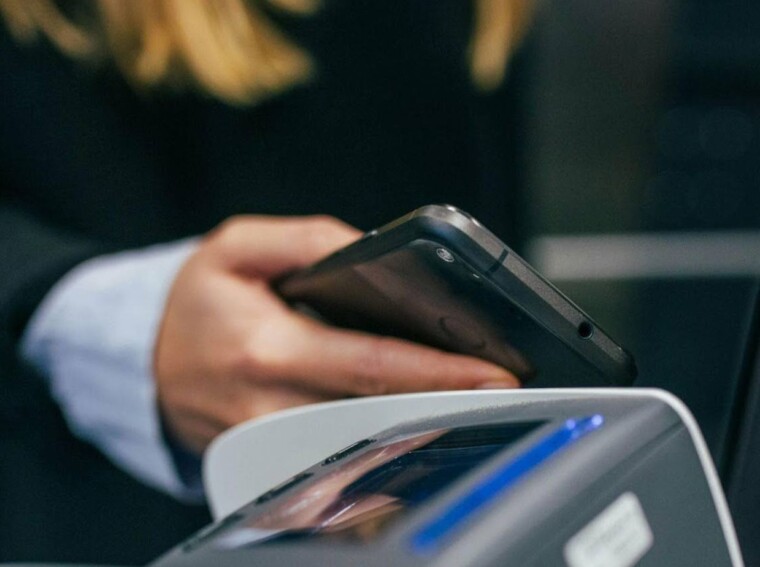
Something subtle has been unfolding across Namibia over the past decade. Mobile money has quietly changed how people send and store cash. And now, somewhat unexpectedly, it’s reshaping the gambling space too. Namibia has long had a regulated gambling sector, with physical casinos and betting shops operating under national oversight. Digital betting arrived later. Growth has been steady and a bit faster than many expected.
The mobile money effect
Roughly half of Namibia’s population remains either unbanked or underbanked, according to regional financial inclusion data. Traditional banking infrastructure and fees have never fully reached rural areas. Mobile money shifted that balance quickly. Services like MTC’s mobile wallet allow users to:
- Deposit and withdraw cash through agents
- Transfer money instantly
- Pay for goods and services without a bank account
And here’s the key point: these platforms are simple. No long forms. No intimidating interfaces. Just a phone.
Why this matters for digital betting
Now, connect the dots. Online betting platforms depend on fast, accessible payment methods. Credit cards? Not widely used. Bank transfers? Slow and sometimes impractical. Mobile money fits neatly into this setup. It allows users to:
- Fund betting accounts instantly
- Withdraw winnings without delays
- Avoid traditional financial barriers
Well, yes, it’s almost tailor-made for this ecosystem.
A digital shift in gambling behavior
Historically, betting in Namibia meant visiting a physical location. That experience had limits, opening hours, travel distance, and social visibility. Users can now bet anytime and anywhere with only a smartphone. Football games, horse racing, even esports, anything is available in real time. In recent years, betting sites in Namibia have seen a steady rise in user registrations alongside growing mobile adoption. Not explosive, not chaotic, but consistent growth.
The role of youth demographics
Namibia has a relatively young population, with a median age under 22. Younger users are:
- More comfortable with mobile technology
- More likely to adopt digital financial tools
- More engaged with global sports and online content
So when mobile money meets online betting, the outcome isn’t surprising.
Regulation: a balancing act
Gambling laws in Namibia were developed during a different time, when physical establishments were prevalent. The question now to regulators is how to regulate a digital market that continues to change. Discussions are ongoing concerning:
- Licensing requirements for online operators
- Consumer protection measures
- Anti-money laundering compliance
True, regulation often lags behind innovation. Namibia has shown signs of adapting, though progress remains cautious.
The risk factor
Problem gambling can be enhanced by easier access to betting. Mobile platforms are less frictional. This is very convenient, but it may result in impulsive action. Other operators have put in place protection:
- Deposit limits
- Self-exclusion tools
- Reality checks during gameplay
Whether these measures are enough remains an open question.
Economic ripples
Revenue and employment
The growth of online betting isn’t just a consumer trend; it has economic implications. Licensed operators contribute through:
- Taxes and licensing fees
- Job creation in customer support and tech roles
- Partnerships with local payment providers
In a country where economic diversification is a priority, digital gambling adds an unexpected layer.
Informal economy integration
Here’s an angle that often goes unnoticed: mobile money bridges the gap between the formal and informal economies.

Many users who were previously outside the financial system now take part in regulated digital activities. That includes betting, yes, but it extends further. It’s not just about gambling. It’s about inclusion.
Technology: the invisible engine
Smartphone penetration
Namibia has seen a steady rise in smartphone usage, driven by:
- Falling device costs
- Expanding mobile networks
- Increased data accessibility
Even in rural areas, connectivity has improved. Not perfect, far from it, but enough to support basic online services.
Platform design and localization
Betting platforms targeting Namibian users have adapted in subtle ways:
- Interfaces optimized for low-bandwidth environments
- Support for local payment methods
- Content tailored to regional sports interests
Cultural shifts and social perception
There was a time when gambling carried a certain stigma, associated with risk and secrecy. Online betting changes that narrative slightly. It becomes:
- More private
- More casual
- More integrated into everyday digital behavior
Does that make it more acceptable? Perhaps.
The influence of global trends
Namibian users follow the same sports and media streams as audiences worldwide. Global betting culture, odds, predictions, and live updates have filtered into local habits. With mobile money in place, participation becomes simple.
What comes next
The trajectory seems clear: continued growth, gradual regulation, and deeper links between mobile finance and digital entertainment. But there are open questions.
- Will regulations tighten?
- Will mobile money providers impose stricter controls?
- Will users become more cautious, or more engaged?
Hard to say. What is certain is that this intersection, mobile money and online betting, is not a passing trend.
Closing thoughts
Namibia’s betting boom isn’t just about gambling. It’s about access. About technology quietly removing barriers that once seemed fixed. Mobile money didn’t set out to fuel a betting surge. It was built for financial inclusion. Yet here it is, enabling a new kind of digital participation. Strange how that works, isn’t it? One innovation leads to another. And somewhere along the way, entire industries begin to shift. Not overnight. But steadily, until suddenly, it’s impossible to ignore.