
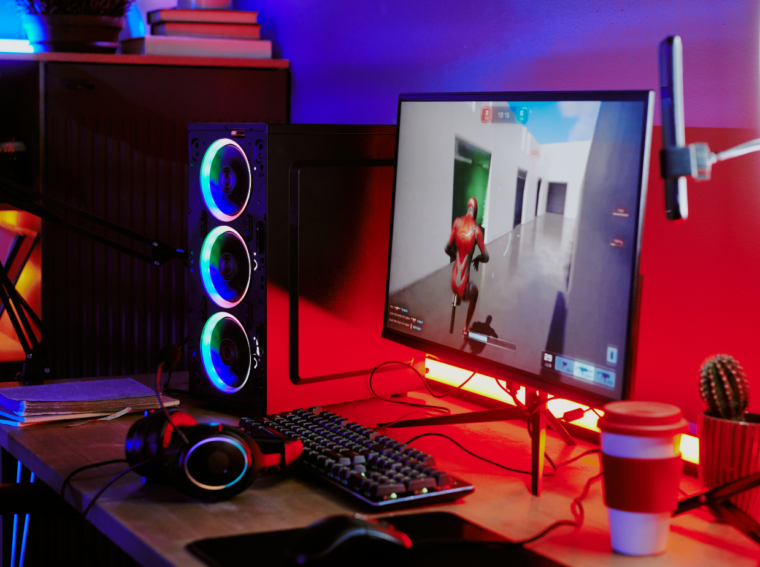
A decade ago, watching someone play a video game live was a niche behaviour shared mostly by competitive-gaming enthusiasts and fighting-game tournament viewers. Today it's one of the largest categories of entertainment consumption on the internet, with Twitch alone averaging over 2.4 million concurrent viewers at any given moment in 2025. The technology that made this possible has spilled out from gaming into adjacent entertainment categories, and the resulting cross-pollination has been more interesting than most people realize.
The streaming infrastructure built originally for esports tournaments now powers everything from cooking shows to talk shows to live dealer games. The throughline isn't the content — it's the latency, the chat integration, and the production tools that make real-time interaction work at scale.
What gaming streaming actually solved
The technical problems Twitch and its competitors solved between 2014 and 2020 were harder than they look. Sub-second latency at scale, chat integration that doesn't lag behind the video, automatic transcoding to multiple bitrates, and a content discovery layer that surfaces the right streams to the right viewers — none of this is easy, and none of it existed in usable form before gaming pushed the requirements.
The gaming use case forced solutions that other industries then adopted. Music concerts streamed live with chat. Cooking shows that take live questions from viewers. News broadcasts that incorporate live audience polls. Even traditional television started experimenting with the formats Twitch normalized.
Where the tech has gone next
The most interesting downstream applications of gaming-stream tech aren't in gaming at all. The same infrastructure that powers a Hearthstone tournament now powers:
Live commerce streams. Whatnot, Amazon Live, and Chinese platforms like Taobao Live have built entire e-commerce categories around live streaming, with viewers placing orders directly through the chat interface. The transaction-per-viewer numbers are an order of magnitude higher than traditional banner-ad e-commerce.
Educational live streams. Khan Academy, Codecademy, and a generation of coding bootcamps have moved from recorded video to live, interactive streaming as the format of choice. The pedagogical research suggests learners retain more from live formats with chat-based interaction than from passive recorded video — partly because the social pressure of being live keeps attention up.
Live dealer entertainment. This is where the technology stack got most aggressively optimized for low-latency interactive video. The best live casinos running in 2026 use streaming infrastructure that would have looked like science fiction five years ago — multi-camera HD, sub-300ms latency, real-time chip placement integration with on-screen action, and chat that sits alongside the dealer interaction. The technical demands of live dealer gaming pushed the streaming-tech stack further than entertainment streaming did, because the latency requirements are tighter and the financial stakes don't tolerate buffering.
Sports betting integration. Live odds updates synchronized with broadcast feeds, viewer props on the next play, and real-time bet-placement during a stream all rely on streaming-tech evolution that started in gaming.
What gaming streaming still does best
Despite the spread of the technology to other categories, gaming remains the strongest stress-test environment for live streaming. Here's why.
Highly skilled producers. Top gaming streamers have spent thousands of hours figuring out what works on stream. The production polish on a typical 50,000-viewer Twitch stream now rivals what TV networks invest in.
Engaged communities. Gaming audiences subscribe, donate, follow, and return at rates that other streaming categories haven't matched. The community-financial dynamic on Twitch has created sustainable creator economies that other platforms struggle to replicate.
Content velocity. A new game release, a meta shift, or a tournament weekend can drive massive viewer surges. The platforms that handle these spikes well end up overbuilt for the daily baseline, which makes the everyday experience smoother.
What this means for non-gaming entertainment
Other entertainment categories have learned that the gaming-streaming model isn't trivially transferable. You need the right combination of community, content velocity, and creator skill to make it work. The categories that have replicated it most successfully — live commerce in Asia, live dealer gaming, certain education subcategories — are the ones where the underlying activity has natural velocity and an audience that wants to participate rather than passively consume.
Music, traditional sports, and news have had more mixed results. Live streaming as a format works for them, but the engagement loops aren't as tight as in gaming, and the creator economies haven't reached the same scale.
For more on how live streaming has shaped specific gaming categories, our piece on the evolution of competitive gaming and esports broadcasting traces the production-side history that made all of this possible.
Where it's heading
The next phase of live streaming is less about resolution improvements (4K is solved, 8K is overkill for most use cases) and more about latency reduction and interaction sophistication. Sub-100ms latency would unlock new gameplay-streaming integrations that aren't currently possible. Better chat moderation tools would let larger streams remain conversational instead of devolving into spam. AI-driven highlight clipping is already changing how streamers package content for non-live audiences.
The biggest open question is whether the creator economy on streaming platforms can sustain its current model as the platform fee structures keep tightening. That's a business problem more than a technology one, but it'll determine whether the gaming-streaming ecosystem keeps producing the innovations that other categories then borrow.
Conclusion
Gaming pushed live streaming further and faster than any other content category, and the resulting infrastructure now powers entertainment formats that didn't exist a decade ago. The technical lessons keep generalizing — to commerce, education, gambling, and beyond — but gaming remains the most demanding test environment.
Anyone building in adjacent categories should start by understanding what gaming streaming got right. Most of the answers were figured out by trial and error in front of audiences that didn't tolerate excuses.