
Mobile Games Are Getting Smarter
Several years ago, a mobile game was considered a mere pastime. It was an option to spend some time on your mobile phone while waiting for a bus or taking a rest. However, today mobile gaming has become a major industry. IviBet keeps a close eye on how new technologies are shaping the future of mobile gaming, creating exciting new opportunities for developers while delivering richer, more immersive experiences for players. Contemporary mobile phones are much more advanced than old phones. They can support games with high-quality graphics, big maps, and an intricate plot.
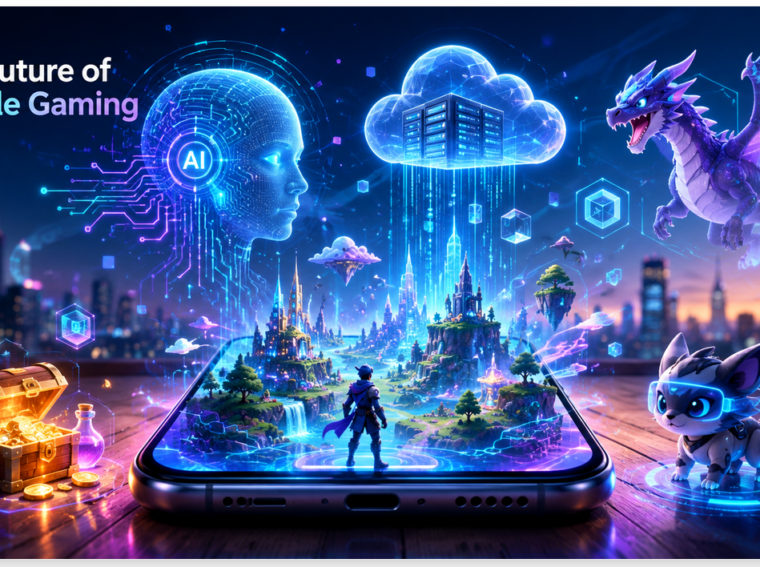
Future advances are expected to come from the development of AI, cloud services, and augmented reality.
AI Will Make Games More Personal
Artificial intelligence is already common in video games. In the past, developers mainly used it to control enemies and other game characters. Now, AI can do much more.
Future mobile games may change based on the way each person plays. The game may become harder for skilled players. It may offer more help to beginners. This can keep the game fun without making it too easy or too stressful.
AI may also create new missions, stories, and conversations. Players will not always follow the same fixed path. The game could react to their choices and create new events.
This means that two people may have very different experiences in the same game.
AI will also help game developers. It can support them when they write dialogue, design characters, create game levels, and test new features. This could reduce the time and cost of game production.
Cloud Gaming Will Remove Device Limits
Many modern mobile games need a powerful phone. They also take up a lot of storage space. Cloud gaming could solve both problems.
With cloud gaming, the game runs on a remote server instead of the player’s phone. The server sends the video to the device through the internet. The player controls the game as usual.
This system could allow people to play advanced games on cheaper phones. They may not need to download large files or buy a new device every few years.
Cloud technology will also make it easier to switch between devices. A player could start a game on a phone, continue on a tablet, and later move to a computer. Their progress would stay the same.
However, cloud gaming needs a fast and stable internet connection. Slow internet can cause delays or lower image quality. Better mobile networks may help reduce these problems.
Augmented Reality Will Bring Games Into the Real World
Augmented reality, or AR, adds digital objects to the real world. Players see these objects through a phone camera or another device.
Some mobile games already use AR. They ask players to walk outside, visit real places, and find virtual characters. In the future, this technology may become more accurate and more useful.
Players could turn their homes into game spaces. A table could become a battlefield. A park could become a fantasy world. Virtual characters could appear to stand in the same room as the player.
AR games may also encourage people to move, explore, and meet other players. This could make mobile gaming more active and social.
New Opportunities for Developers
These technologies will give game studios more creative freedom. Small teams may be able to build larger and more detailed games with the help of AI tools.
Cloud services could let developers create games that are too demanding for a normal phone. They could offer console-style graphics without asking players to own expensive devices.
Developers could also create more personal experiences. A game might adjust its story, difficulty, and rewards for each player.
At the same time, studios will need to protect user data. AI and cloud systems may collect information about how people play. Developers must use this data safely and clearly.
What Players Will Gain
Players can expect better graphics, smarter characters, and more varied stories. They may also get access to high-quality games on basic phones.
AI could make every game feel more personal. Cloud gaming could remove storage and hardware limits. AR could mix digital adventures with real places.
These tools may also lead to new game types that do not exist today. Developers will be able to test ideas that were once too expensive or too difficult.
Final Thoughts
The future of mobile gaming looks exciting. AI will make games smarter and more personal. Cloud technology will make advanced games easier to access. Augmented reality will connect virtual worlds with everyday life.
Mobile games will no longer be only a quick way to pass the time. They will become larger, richer, and more interactive.
For both developers and players, this change will bring new choices and new opportunities. Ideas that once seemed like science fiction may soon become a normal part of mobile gaming.