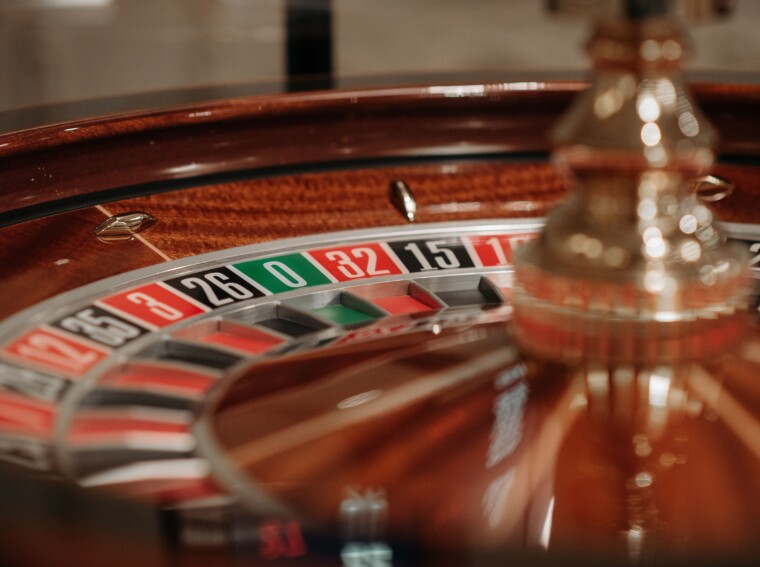
Roulette does not give much away at first. The layout looks tidy, the bets have simple names, and even a newcomer can place a chip without asking too many questions. Then zero lands, and the table suddenly feels a lot less friendly.
That zero is also the quickest way to tell European and American roulette apart. Check https://roulette77.us/american-roulette to see: European roulette has 37 pockets, numbers 1 to 36 and one zero; and American roulette adds 00.
The Extra Pocket Changes the Price of Every Spin
The house-edge principle is exactly why American roulette costs more over time: not because every spin feels brutal, but because every spin carries a worse deal.
| Feature | American Roulette | European Roulette | Player Impact |
| Total wheel pockets | 38 | 37 | American roulette gives every number a slightly lower hit chance |
| Green pockets | 0 and 00 | 0 only | The double zero increases losing outcomes on most bets |
| House edge | 5.26% | 2.70% | American roulette drains long sessions faster |
| Straight-up number odds | 1 in 38 | 1 in 37 | European roulette gives a better chance at the same payout |
| Straight-up payout | 35 to 1 | 35 to 1 | American roulette does not compensate players for the extra pocket |
| Even-money bet risk | Loses on 0 and 00 | Loses on 0 | Red/black and odd/even bets face more danger in American roulette |
| Best fit | Short, high-tension sessions | Longer, lower-edge sessions | Game choice should match bankroll and risk tolerance |
Inside Bets Bring Drama, But the Maths Still Rules
A straight-up number pays 35 to 1 in both versions. A split pays 17 to 1. A street pays 11 to 1. A corner pays 8 to 1. A six-line bet pays 5 to 1. The board gives players plenty of ways to shape risk, but the wheel version still sets the background cost.
American roulette makes every inside bet slightly harder because the extra pocket dilutes the chance of landing on the covered numbers. A corner bet covers four numbers. In European roulette, that means 4 winning pockets out of 37. In American roulette, it means 4 winning pockets out of 38. The difference does not change the payout board, but it changes the probability behind it.
That point matters for players who build “coverage” systems. Some players spread chips across neighbours, dozens, corners, and colours, then feel protected because many numbers now carry a chip. Coverage does not remove the house edge – it only changes how often wins appear and how large those wins look. A broad layout may create more frequent small returns, while a tight layout may create fewer but larger hits. Neither layout beats the extra zero.
European Roulette Gives Players a Better Deal on Zero
Zero is where roulette stops feeling fair. A player can make the most ordinary bet on the table, red instead of black, and still lose to a number that belongs to neither side. That is already part of European roulette. American roulette makes it worse by adding double zero.
Some European tables soften that moment with La Partage or En Prison – those only apply to even-money bets, so they matter for red/black, odd/even, and high/low.
La Partage gives back half the stake when zero lands – e.g., $20 bet on red loses $10, not the full $20. En Prison keeps the same bet on the table for another spin.
A quick check before betting tells players plenty:
- Does the wheel show one zero or two?
- Do the rules mention La Partage or En Prison?
- Does the rule apply only to even-money bets?
- Does the minimum bet suit the session budget?
- Does the player have a reason to choose this table beyond the last few results on the screen?
A player does not need a system to choose the better wheel – they only need to read the rules before the ball starts moving.
Online Roulette Makes the Gap Harder to Ignore
Online roulette moves too quickly for its own good. In a casino room, things get in the way: the dealer clears chips, someone changes their mind, another player fumbles with stacks, and the wheel gets a breather. Online, there is none of that. Result, click, spin again. A cold run can start before the player has even finished being annoyed by the last one.
That pace changes the money side fast. A $5 bet sounds harmless, almost casual. But 40 spins already means $200 in total wagers. Make it 200 spins, which online play can reach without much drama, and the same small bet has pushed $1,000 through the wheel. The house edge does not care about the deposit size. It works on every bet, again and again.
That is where American roulette can feel rough. The 5.26% edge already gives the game a heavier pull, and fast online play lets that pull show up sooner. A few wins can cover it for a while, sure. Then the 00 lands, or the reds miss, or the small losses start stacking up in that dull way players know too well. European roulette still takes money over time, but its 2.70% house edge gives the bankroll more room to survive a typical session.
Which Version Fits the Player?
European roulette fits players who want the better deal and a session that does not burn too hot too fast. The single zero gives every standard bet a cleaner chance, and rules such as La Partage can make even-money bets less punishing.
American roulette fits players who like a rougher ride and know exactly what they have chosen. The double zero adds tension, but it also adds cost. That version makes more sense for short sessions with strict limits than for long, casual play.
The honest choice is not complicated. European roulette gives better odds. American roulette gives more bite. A player can enjoy either wheel, but the double zero should never slip past unnoticed.